







Get students on board with active learning
It is a common worry in STEM teaching that students will resist active learning and simply expect and prefer passive methods. But in practice, students usually embrace it once they see how it helps them understand the material and pass the course.
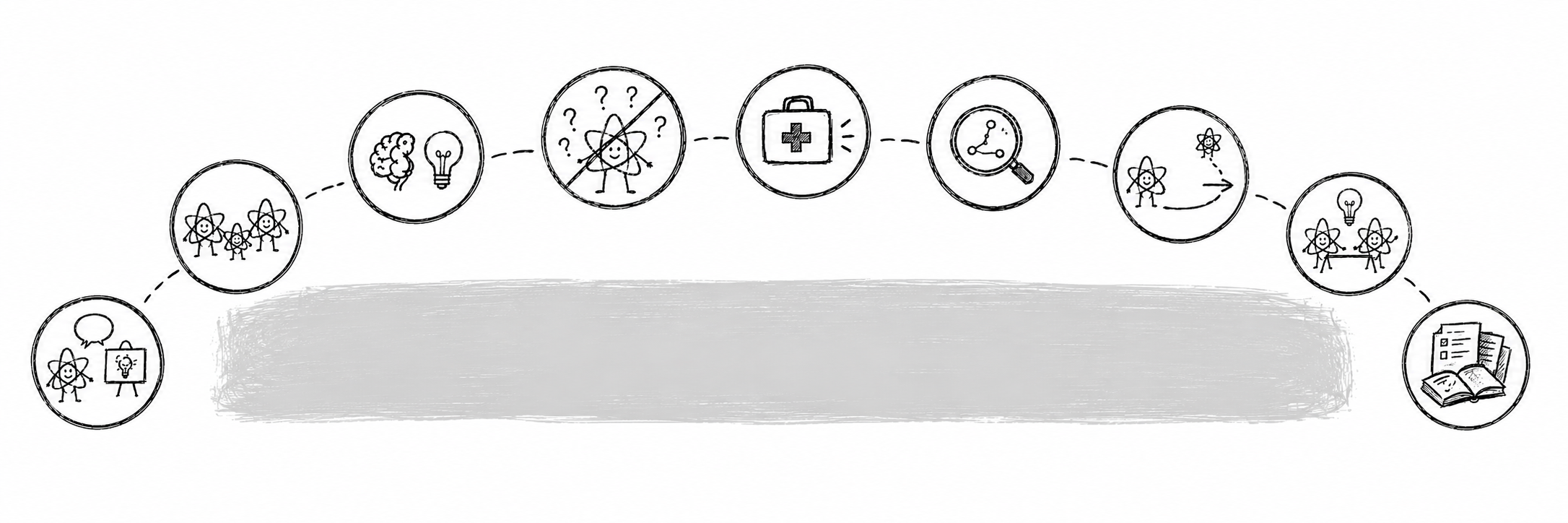
Here you’ll find 8 points of advice how to get students, also the more quiet ones, on board for your active teaching methods.
1. Validate: Make your goals explicit
Tell students clearly what you are doing and why. Explain how your course is built in simple language and how this way of working helps them learn. Students appreciate clarity and structure, and when they see that an activity is not random but directly linked to their success, they are far more willing to join in and try.
Students can initially experience active learning with some uncertainty because it differs from the lectures they are used to. They may worry about making mistakes in front of others, feel dependent on peers in group work, or doubt whether activities are really preparing them for assessment. When purposes and instructions are not crystal clear, tasks can seem like extra work instead of meaningful practice, especially if students mainly associate learning with listening and memorizing, but these three best practice stories coming from statistics, physics, and programming courses, demonstrate that once students see how they learn more, they generally appreciate the extra practice.
A four-step-plan for quick and clear validation 
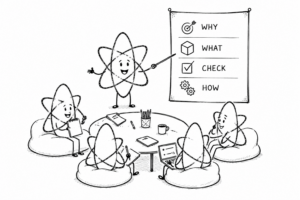
At the start of your course and before an active learning activity, explain to your students:
- Why is the course / activity set-up like this?
- What are we going to do?
- Check if there are questions
- How are we going to do this?
(save actual practicalities for last, as they quickly consume all attention)
- Have a complete Canvas page ready before the course starts. Write a friendly welcome message in which you include the course vision. If you need help building or structuring your Canvas page, join a guided Canvas session.
- Use designated time in your first lecture to explain the course set-up, goals, expectations (e.g. regarding attendance), and assessment. Make a clear overview or visual and include it in your slides / teaching material.
- Leave room for questions about the course design, but not for complaints in advance.
2. Keep different learning preferences in mind
Students’ learning preferences vary. Your student population will consist of extraverts, introverts, neurodivergent students, fast learners, slow learners, students from all kinds of different backgrounds, and they have diverse learning styles. It is important to consider these and apply a variety of learning activities so that your course caters to all students, not just a subset.
For example, introverted students prefer to think before they speak, enjoy working independently, and feel most comfortable with written, small scale, or quieter forms of engagement. Spontaneous speaking up in a full classroom causes stress for these students and they generally avoid it. As this makes them a more quiet or less prone to ask questions, they may get overlooked.
On the other hand, extraverted students thrive on interactivity and learn well by talking about concepts and ideas, and collaborating. They often enjoy spontaneous discussion, rapid back-and-forth questioning, and opportunities to lead or present. In active-learning STEM settings, these students typically engage readily in group work and may be the first to volunteer answers.
Benefits for all students
 It’s a common misconception that active learning mainly benefits extraverts or only fast learners. When activities are structured and expectations are clear, introverted students perform just as well and appreciate the chance to exchange ideas and develop collaboration skills. What they need is time to process information and options to contribute in ways that fit how they work best.
Also neurodivergent students can experience difficulties in studying when most learning activities don’t fit their learning preferences. Neurodiversity is a range of differences in individual brain function and behavioral traits, regarded as part of normal variation in the human population. Neurodiverse students are often helped by having a clear structure and explicit communication. Peer lecturer Chantal Vlaskamp (Psychobiology) has created a useful handout with teaching tips that not only consider neurodivergent students but actually benefit the whole student population.
When you make your lessons more interactive, start from the idea that students engage in different ways. Recognize that students who speak less are not necessarily less engaged, capable, or prepared. Above all, aim for a climate in which all students feel safe to try out ideas, ask questions, and admit confusion, without fear of embarrassment.
General:
- Use a variety of learning activities and activating methods so that each student has a chance to profit from them.
- Invite students to share what helps them learn best and be open to reasonable adjustments where possible. Small accommodations and individual check-ins can significantly improve students’ comfort, confidence, and engagement
For introverted learners:
- Offer individual think time before sharing and interaction
- Offer multiple ways for students to participate, including written reflections, online discussions, polls, shared documents, and anonymous contribution such as Wooclap quizzes or exit tickets.
- When sharing ideas verbally, let students do this in small groups or with neighbors, rather than the whole classroom
- Instruct peer feedback with clear guidelines and criteria, and the option to give comments in writing, before sharing or discussing in pairs or small groups.
- Let students know in advance when they will be expected to contribute or give feedback, and share key prompts or questions beforehand so they can prepare.
- In group tasks, assign rotating roles (such as note-taker, summarizer, or spokesperson) so quieter students can contribute in ways that suit them while still having a voice.
For extraverted learners:
- Encourage extroverted students to practice active listening and summarizing group ideas, not only speaking first, so their strengths support the whole group.
- Build in regular opportunities for discussion, questioning, and short presentations, so they can process ideas aloud.
- Use interactive formats like think–pair–share, mini debates, or problem solving in teams to channel their energy into the task.
- Also offer occasional “leader” roles (facilitating a discussion, reporting back to the class) while also rotating these roles to ensure others have space to step forward.
For neurodivergent learners:
- Keep in mind that every neurodivergent individual is unique and that effective support should always be tailored to their specific strengths, abilities, and needs.
- A clear and well-communicated course set-up with a consisted structure, and schedule is generally beneficial not only for neurodivergent, but all students.
- Read this handout with tips for teaching neurodivergent students by peer lecturer Chantal Vlaskamp.
- Check these tips for considering neurodivergent students by our colleagues at the VU, or this comprehensible page by our colleagues at Utrecht University
- Every now and then, workshops are offered on teaching students with an autism spectrum disorder. Keep an eye on the workshop page if you’re interested.
3. Build in visible and continuous progress
 Give students early experiences of success. Start with tasks or questions that almost everyone can attempt, then move to more challenging variations once they are warmed up.
Positive emotions like success and pride are strong motivators. If you can say “Last week many of you were unsure about this, and now almost all of you can solve it”, students see clear evidence that the active work matters.
Do keep an eye out, if at some point most students can’t do ‘the difficult question’, see if a certain thinking step or skill needs extra explanation and practice before moving on; be aware of the ‘curse of knowledge‘ that you as an expert may have.
If students get a quick grasp which strategies help them reach early success, it benefits them throughout the whole course.
- Begin with an easy first question that taps into a basic fact or a familiar example from the previous lecture, and that most students will be able to answer. Once the first task is solved, use a follow-up that adds just one new element. This way students can stretch their thinking without feeling overwhelmed.
- Give a task in a simple command or questions, to reduce cognitive load. Not a slide filled with instructions, but one sentence, for example: “Pick the correct diagram, then write one sentence explaining why it fits the concept.”
- Give instant, specific praise when a group or individual nails a task. Acknowledge the exact behavior: “Great job spotting the key variable in that diagram.”
- Close with a brief reflection. Ask students to write one line, for example: “What helped me solve the first question?”
- Offer weekly (digital) tests, or tests per topic, that students can re-take until they ‘pass’; they can be fully formative, or part formative, part summative.
- Reuse similar questions in lessons and in assignments or exams and point this out explicitly, so students recognize the link between participation and performance. For example: “The way you explain your reasoning here is exactly what I look for in the exam”
- If you use a rubric, give it to students the rubric while working. Show the relevant rubric lines and ask students to quickly self‑assess: “Where do you score your group/ yourself so far?”
4. Make (peer) interaction standard, not awkward
If tutorials have always consisted of individual work, students don’t get used to talking to a lecturer or a peer. A persistent culture can then develop in which no one expects any interaction. This sets a high threshold for starting up any kind of interaction; thus creating an unfortunate vicious cycle. Interaction is favorable, as it not only deepens learning, but also, in a future career students will likely be expected to have the skills to collaborate, present, and share ideas.
It pays off to invest in a safe and interactive culture from the start of your course or programme, whilst also keeping different learning preferences in mind (see tip 2).
- As the lecturer, give the good example from the start. Leave room for student questions, start low-stakes small interactive activities in each lecture, and give students some time to think and formulate their questions before moving on too quickly.
- Include at least some peer interaction in each lecture and tutorial.
- Regularly underline to students that you love hearing their ideas, love seeing them share ideas among each other, that they are learning together, that mistakes are welcomed, and that your course is a platform for that.
- Actively ask for student questions after every new topic or example you’ve explained in your lecture, give them enough time to collect their thoughts and respond, and be appreciative of input. And check these tweaks for stimulating student questions.
- Use short think-pair-share or explain to your neighbour activities in your lectures, where students can think for themselves, then interact, and share. Get students used to talking to a peer in small bits and take away the first awkwardness.
5. Be visibly present and welcoming
 Interviews with students reveal that they value being seen and recognized as a person as soon as they walk into a session, and that it influences their lecture attendance. So play into that; always kick-off with a low threshold active plenary start in lectures and tutorials alike. For tutorials, you can use this checklist Giving clear instructions in 5 steps to give clear and motivating instructions, even if you expect that students already know what they have to do. It’s a good moment to fix misinterpretations.
Also stay active while students work. Engage with students even if no questions come. Listen to conversations and ask open questions like “What is your first step here?” or “What are you assuming?”. This kind of light coaching shows that you care about how they think, not just about right answers.
When you bring the class back together, share a few strong ideas you overheard and calmly address common errors without picking on individuals. Students learn that it is safe to speak up and that mistakes are part of the process. Appreciate their contributions.
- Welcome students who walk into the tutorial room. With larger groups, or if you have trouble remembering names, simple things like a nod, or a “Good to see you” can already have much effect.
- At the end of the tutorial, explicitly mention looking forward to seeing them in the next tutorial, where you’ll be working on …. with them.
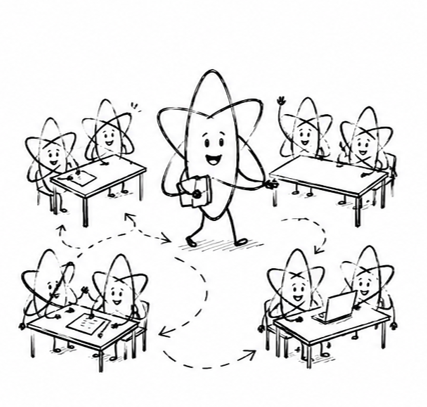
- Always set your tutorial room in U-shape or small groups, even for individual work. It lowers the threshold to talk to peers or the lecturer and it’s easier to walk around. It takes some time in the beginning of the class, so ask students to help to rearrange the furniture. If you do it a few times, it quickly becomes standard.
- Explain in advance that you’ll move around the room and interact with them. Not as a police officer, but to guide and help, and out of genuine interest.
- If you and/or TAs struggle with addressing students ‘out of the blue’, think in advance of a few good, open, starting questions (or let UvA AI Chat help you).
- If single students often ask for a similar explanation, give your explanation to a small group rather than a single student and encourage those involved to think along.
6. Students as learning-partners
Invite students into the improvement of your course. Ask them from time to time how the activities are working for them, and what could be clearer or more helpful. You can talk to them or let them give written feedback, if desired anonymous. You don’t have to follow each and every suggestion you get, but you can explain which ideas you will try and why.
Directly act upon feedback that you agree with and that can quickly be addressed; such a simple feedback loop builds trust. Active learning then feels like a shared strategy you and your students use together to master demanding STEM content.
- Spend the last two minutes of every class on an exit ticket with a single, open‑ended question such as “What part of today’s activity helped you most?” or “What still feels unclear?” Use Wooclap or a sticky‑note board so everyone can see the themes instantly.
- You can ask students for topics or cases they are interested in and use those in the next session. Create a short, anonymous online form that you open for a week after each major activity. Include a checkbox list of common issues (e.g., “instructions were unclear” or “group sizes were too large”) plus a free‑text box for new ideas. Review the results before the next class and pick one or two items you can change.
- Summarize the feedback you received, state which suggestion you’re adopting, and explain why. For example: “You told me the worksheet was too dense, so I split it into two parts and added a quick example.” This makes the loop visible and signals that student input matters.
- Pilot a student proposed activity in a single class. Ask a volunteer group to design a problem or discussion prompt related to the week’s topic. Run it, then debrief together: “What worked? What didn’t?” If it succeeds, keep it for future weeks. This gives students ownership and gives you a readymade activity. This interactive in-class peer review method was partially designed by students who struggled with peer review.
- Schedule a brief “office hour feedback” session mid semester (15-20 minutes). Invite the whole class to drop in (physically or via a video call breakout room) and share one thing they’d like to see changed. Take notes, thank the contributors, and commit to a (small) concrete adjustment.
7. Have a clear lesson plan
 When students know what to expect, it removes insecurity about how to start, and how to keep going. And this reduces cognitive load. Your lesson plan can be dynamic, so that you don’t entangle yourself in too strict rules, but it should also be a base to lean on.
Share your lesson plan and timeline with the students, and if possible leave it where they can see it the whole time. It will help them to direct their focus to the right material at the right time.
- Make a lecture-slide (or write on a board) what topics you’ll cover and how much time you spend on them, including a break and room for questions. During the session, you can re-screen the outline slide every time before going to the next subject.
- That is also a good moment to check for questions (or an interactive activity) about the previous topic.
- In a tutorial, write the timeline on a white/blackboard so students can see it the whole time while working. For example: Group activity from 11.00-11.30, plenary explanation 11.30-11.40, mini-quiz 11.40-11.45, short break, individual work and questions from 12.10-13.00.
8. Act as if it’s normal, but be open about what’s new and insecure
As with any new technique or design, your course design will grow and evolve with experience. It doesn’t have to be perfect from the first try. If you feel insecure, peers who’ve activated their lectures advice you to ‘act as if this is just the normal way to work’. And if at some point you’re trying something bigger or out-of the box, redesigned a whole course, or even built a new one, be open about the novelty of it. Incorporate small improvements on the go.
In the first round of a new design, the student experience can be colored by persistent expectations or by rumors from previous cohorts. And although active learning has been proven to enhance learning outcomes of all students, not only the strongest ones, there can always be that handful of high-performing students who had counted on leaning back and studying the book at home. Give your course, and the students, a chance to grow into it; students tend to be quite appreciative afterwards.
- Think aloud and say something like, “I don’t have a perfect script for this, and I might need to tweak it after we try it. Your feedback will help me improve.”
- Briefly recount how you discovered the method ‘behind the scenes’. Perhaps at a conference talk, a colleague’s suggestion, or a research article. For example, “I read a study last month showing that short peer explanations boost problem solving, so I wanted to offer it and test it with you.”
- When you notice a minor hiccup during an activity (too little time, an ambiguous question, etc), pause for a show‑of‑hands or a poll on what to do, for example: “Should we add two extra minutes for this part?” Implement immediately.
- When an activity goes well, highlight it explicitly: “That brainstorm produced three valuable approaches, well done! You’ve found ideas we might otherwise miss.”
- If you’re afraid of persistent complaints by the students who can get by on the book alone, you can think beforehand about a rebuttal or about what you might offer them extra.
Allen, G. K., Wedman, J. F., & Folk, L. C. (2001). Looking Beyond the Valley: A Five-Year Case Study of Course Innovation. Innovative Higher Education, 26(2), 103-119. https://doi.org/10.1023/A:1012288421619
Apkarian, N., Henderson, C., Stains, M., Raker, J., Johnson, E., & Dancy, M. (2021). What really impacts the use of active learning in undergraduate STEM education? Results from a national survey of chemistry, mathematics, and physics instructors. PLOS ONE, 16(2), e0247544. https://doi.org/10.1371/journal.pone.0247544
Balsamo, M., Lauriola, M., & Saggino, A. (2012). Personality and College Major Choice: Which Come First? Psychology (Savannah, Ga.). https://doi.org/10.4236/psych.2012.35056
Beckerson, W. C., Anderson, J. O., Perpich, J. D., & Yoder-Himes, D. (2020). An Introvert’s Perspective: Analyzing the Impact of Active Learning on Multiple Levels of Class Social Personalities in an Upper Level Biology Course. Journal of College Science Teaching, 49(3), 47-57.
Coenen, J., Borghans, L., & Diris, R. (2021). Personality traits, preferences and educational choices: A focus on STEM. Journal of Economic Psychology, 84, 102361. https://doi.org/10.1016/j.joep.2021.102361
Condon, M., & Ruth-Sahd, L. (2013). Responding to introverted and shy students: Best practice guidelines for educators and advisors. Open Journal of Nursing, 3(7), 503-515. https://doi.org/10.4236/ojn.2013.37069
Deslauriers, L., McCarty, L. S., Miller, K., Callaghan, K., & Kestin, G. (2019). Measuring actual learning versus feeling of learning in response to being actively engaged in the classroom. Proceedings of the National Academy of Sciences, 116(39), 19251-19257. https://doi.org/10.1073/pnas.1821936116
Dzaiy, A., & Abdullah, S. (2024). The Use of Active Learning Strategies to Foster Effective Teaching in Higher Education Institutions. Zanco Journal of Humanity Sciences, 28(4). https://doi.org/10.21271/zjhs.28.4.18
Flanagan, K. M., & Addy, H. (2019). Introverts Are Not Disadvantaged in Group-Based Active Learning Classrooms. Bioscene: Journal of College Biology Teaching, 45(1), 33-41.
Freeman, S., Eddy, S. L., McDonough, M., Smith, M. K., Okoroafor, N., Jordt, H., & Wenderoth, M. P. (2014). Active learning increases student performance in science, engineering, and mathematics. Proceedings of the National Academy of Sciences, 111(23), 8410-8415. https://doi.org/10.1073/pnas.1319030111
Gaffney, J. D. H., & Gaffney, A. L. H. (2016). Student satisfaction in interactive engagement-based physics classes. Physical Review Physics Education Research, 12(2), 020125. https://doi.org/10.1103/PhysRevPhysEducRes.12.020125
Gilbert, R. O., & Gilbert, D. R. (2025). Student evaluations of teaching do not reflect student learning: An observational study. BMC Medical Education, 25(1), 313. https://doi.org/10.1186/s12909-025-06896-3
Miller, E., Fowler, J., Johns, C., Johnson Jr., J., Ramsey, B., & Snapp, B. (2021). Increasing Active Learning in Large, Tightly Coordinated Calculus Courses. PRIMUS, 31(3-5), 371-392. https://doi.org/10.1080/10511970.2020.1772923
Nguyen, K. A., Borrego, M., Finelli, C. J., DeMonbrun, M., Crockett, C., Tharayil, S., Shekhar, P., Waters, C., & Rosenberg, R. (2021). Instructor strategies to aid implementation of active learning: A systematic literature review. International Journal of STEM Education, 8(1), 9. https://doi.org/10.1186/s40594-021-00270-7
Pekrun, R. (1992). The Impact of Emotions on Learning and Achievement: Towards a Theory of Cognitive/Motivational Mediators. Applied Psychology, 41(4), 359-376. https://doi.org/10.1111/j.1464-0597.1992.tb00712.x
Ryan, R. M., & Deci, E. L. (2020). Intrinsic and extrinsic motivation from a self-determination theory perspective: Definitions, theory, practices, and future directions. Contemporary Educational Psychology, 61, 101860. https://doi.org/10.1016/j.cedpsych.2020.101860
Semanko, A. M., & Ladbury, J. L. (2020). Using the Reasoned Action Approach to Predict Active Teaching Behaviors in College STEM Courses. Journal for STEM Education Research, 3(3), 387-402. https://doi.org/10.1007/s41979-020-00038-8
Shamsi, S. Z. Z., Mehmood, S., Mahmoona, S., & Fakhar-Ul-Zaman. (2024). Designing Effective Teaching Strategies for Introverted Learners: A Practical Classroom Framework. `, 2(No.03), 1-16.
Tharayil, S., Borrego, M., Prince, M., Nguyen, K. A., Shekhar, P., Finelli, C. J., & Waters, C. (2018). Strategies to mitigate student resistance to active learning. International Journal of STEM Education, 5(1), 7. https://doi.org/10.1186/s40594-018-0102-y
Theobald, E. J., Hill, M. J., Tran, E., Agrawal, S., Arroyo, E. N., Behling, S., et al. (2020). Active learning narrows achievement gaps for underrepresented students in undergraduate science, technology, engineering, and math. Proceedings of the National Academy of Sciences, 117(12), 6476-6483. https://doi.org/10.1073/pnas.1916903117