







Recap: ‘What if There Were No Grades?’
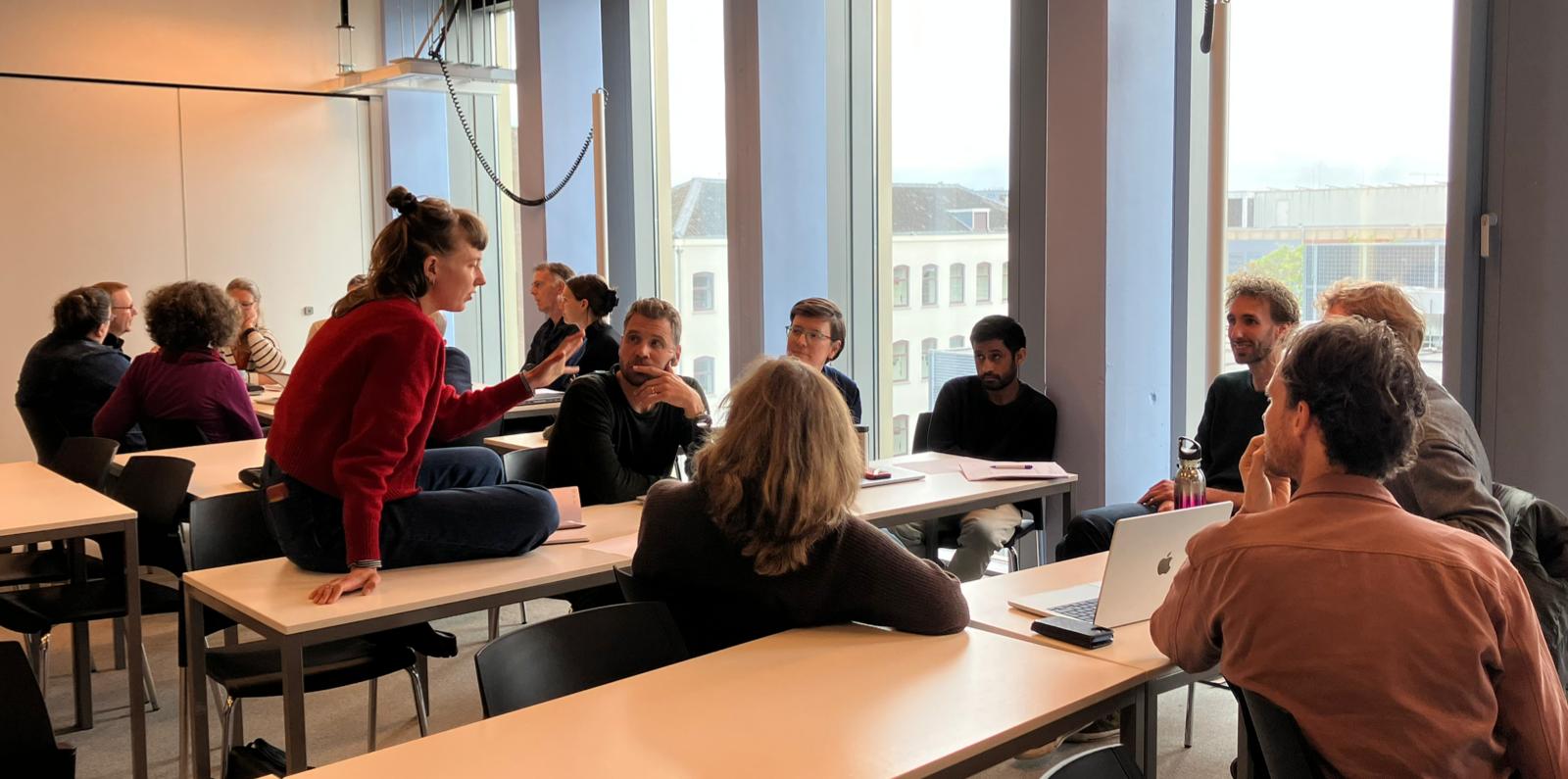
Following our Let’s Read & Discuss session “What if There Were No Grades?”, which took place on 18 May 2026, the SIG SoTL and the SIG Assessment look back on an engaging and thought-provoking conversation with colleagues from across the UvA. The discussion created space for sharing experiences, questions, concerns, and ideas related to assessment practices, motivation, feedback, and educational culture. In this recap, we reflect on some of the main themes and insights that emerged during the session.
Themes and insights of the session
1. Student perspectives on grading/ungrading
One important theme in the discussion concerned the diversity of student perspectives on grading and ungrading. Participants reflected on one of the article’s central findings: that students themselves do not always see ungrading as beneficial or empowering. Living in a deeply metric society, grades are often experienced as sources of recognition, structure, and future opportunity. This raised questions about whether students can realistically imagine the benefits of ungrading while still operating within metric systems shaped by competition, performance, and uncertainty. Participants also emphasized that there is no such thing as “the student”: while some students may experience grades as stressful and limiting, others may rely on them for motivation or validation.
2. Broader purpose of higher education
| A second theme focused on the broader purpose of higher education and the role of grades within it. Participants questioned whether grading has shifted attention away from curiosity, intrinsic motivation, and learning itself toward performance and success. This led to reflections on the societal role of universities: should higher education primarily prepare students for the labour market, or should it instead stimulate curiosity and foster critical thinking? Several participants saw the article as an invitation to rethink the broader aims and values underpinning higher education. |  |
3. Practical alternatives and tensions in implementation
These reflections also led participants to discuss practical alternatives to traditional grading systems or pass/fail assessments. Portfolios, descriptive feedback, self-assessment, and flexible learning pathways were mentioned as potentially richer ways of representing student learning and development. One participant envisioned an ideal system in which students could take assessments multiple times and follow individualized learning routes toward the same learning outcomes. At the same time, practical concerns were raised about staff workload, scalability, and the feasibility of providing intensive guidance within current institutional constraints. Participants also noted that alternative forms of assessment may themselves become re-metrified, for example through AI-supported ranking or selection practices.
4. Reflections on the article’s approach
 |
Finally, participants reflected on the methodological approach of the article itself. The use of “removal” as a method — asking students to imagine higher education without grades — was seen as both thought-provoking and challenging. Several participants appreciated the value of interviews for exploring how students make sense of grading cultures and for uncovering the “common sense” assumptions that underpin higher education systems. However, some noted that imagined futures may generate different responses than lived experiences. At the same time, the article was seen as having a broader, counter-hegemonic aim: not necessarily to predict outcomes of ungrading, but to challenge the taken-for-granted status of grading itself. |
Continuing the conversation
The session ultimately highlighted not only the complexity of rethinking grading practices, but also the importance of creating spaces within higher education where such fundamentalquestions can be openly explored and debated. We hope these reflections will inspire further conversations, and that you will join us in one of our upcoming sessions!