






EduSnacks Webinars
Boost your knowledge and enrich your teaching
Welcome to the TLC webinar series: EduSnacks. In these webinars, (teacher) researchers from Child Development and Education share findings from research around various didactic themes. The webinars are short and concise and bridge the gap between educational research and teaching practice. Do you want to give your education an evidence-informed boost? Join us online!
The webinars are held in English and Dutch alternately.
Next up: 8 October - Practising ‘real’ conversations with an AI conversation partner
What if you could let students practise safely with an AI conversation partner first, and only then take the step to ‘real’ conversations? Professional communication skills are crucial, but opportunities to practise with real conversation partners are scarce, costly and often daunting for students.
In this webinar, Jesper Pool will share how the pAItient sim — a GenAI virtual patient in chat form — has been used in the Bachelor’s programme in Medicine. We will discuss how students actually use it and why some are (still) opting not to use it. We will also consider your role as a lecturer. Together, we will explore which communication skills can be practised with GenAI, and the challenges involved.
Speaker
 |
Jesper Pool is a Medical Educator at the Faculty of Medicine. He is an Education Research Fellow in GenAI in education and is involved in developing blended learning using AI, XR and video. |
Details
| Event | EduSnacks: Practising ‘real’ conversations with an AI conversation partner | |
| Date & time | 8 October 2026, 12.30-13.00h | |
| Location | Online webinar | |
| Language | English | |
| Speakers | Jesper Pool |
Setup of the webinars
 |
|
Archive
Use of AI chatbot for student reflection
Reflective practice is key to building students’ ethical competences. Yet in large courses, assessing written reflections is time‑consuming and often ineffective. In this webinar, we explain how we trained an AI persona in the UvA AI Chat and how students used it to reflect on their course.
We will address:
- how we defined the input for the chatbot
- how we trained the AI persona
- what the quality of the AI‑generated reflections was and
- how students evaluated this tool
Drawing on student and teacher experiences, the webinar will provide insights into the possibilities and challenges of using GenAI to design more inclusive, effective, and efficient reflective assignments.
About the research
We conducted an experiment in the course Research Project Netherlands of the Bachelor in Human Geography and Planning (January 2026). About 160 students completed oral group reflections throughout the fieldwork week and conducted their individual final reflections via a conversation with the UvA AI Chatbot. 135 students completed a short survey about their experiences reflecting with AI and a small selection of students was recruited for a focus group interview. In this webinar we will show how we trained one AI Persona within the UvA AI Chat environment, to facilitate individual reflective practice on fieldwork experiences and report our preliminary findings about students’ experiences as well as the quality of the AI reflections.
Speakers
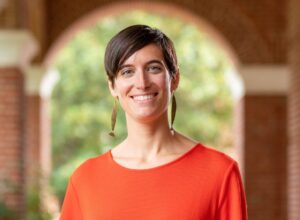 |
Dr. Federica Bono is an Assistant Professor of Human Geography in the Department of Geography, Planning, and International Development Studies and member of UvA’s Political and Economic Geographies Research Group. As an educator she is especially committed to an inclusive and engaged pedagogy that emphasizes active learning and centers social justice and reciprocity in university/community relations. Federica is the coordinator of the new Community-Engaged Master in Spatial Analysis (Human Geography) which addresses community-identified priorities through GIS while maintaining a commitment to the public good. | |
|
|
Dr. Inge van der Welle is a Lecturer in Human Geography in the Department of Geography, Planning, and International Development Studies and a former TLC Research Fellow. Inge is dedicated to strengthening and future-proofing academic skills and fieldwork within human geography education. Her current educational research particularly centers on developing and advancing effective approaches to research ethics training. | |

Fair and inclusive assessment
Assessments are meant to show whether students have achieved the learning outcomes. But what if the way we assess unintentionally puts some students at a disadvantage because of their socioeconomic or cultural background, language skills, or neurological or physical differences?
In this webinar, you’ll learn how assessment design can unintentionally create barriers and what you, as a lecturer, can do about it. We will explore a range of strategies you can apply easily and effectively in your assessments to help all students demonstrate what they have learned.
Speaker
 |
H.R.J. (Hannah) Kousbroek MA (she/her) is an assessment specialist at TLC Central and TLC Humanities. She is co-chair of the Special Interest Group on assessment and co-author of the TLC e-learning course and web resources on assessment. Building on her past experience as a lecturer in English Language and Culture, Hannah now teaches the BKO and coordinates the BKO+ track on assessment (BKE). Her current research interests include assessment and genAI and inclusive teaching and assessment practices.
|
This webinar focusses on designing engaging and deep learning experiences. How do you balance active participation with opportunities for reflection in your classroom? What strategies can you use to foster deep learning and introspection? Building on cognitive load theory and contemplative pedagogy, Lela Mosemghvdlishvili will introduce Pedagogical Continuums, a practical framework to help teachers design meaningful and cognitively engaging learning experiences.
During this webinar:
- Participants will gain insight into four key dimensions (time, space/sound, direction of engagement, and processing style) for designing learning experiences that reduce cognitive load and foster student engagement and meaning-making.
- Through practical examples, you will be invited to explore how to achieve an optimal balance within and across these dimensions—blending fast-paced interactive activities with moments of introspection to deepen learning.
This webinar is held in English.
Speaker
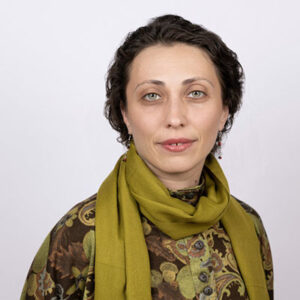 |
Dr. Lela Mosemghvlishvili (they/she) is an education innovator, committed to “humanizing” teaching and learning at universities. They work at the intersection of holistic, whole-student centered pedagogy and technological innovation, where they integrate GenAI-facilitated learning with slow-paced, contemplative learning methods. With 17 years of experience in teaching and mentoring undergraduate students, Lela is the holder of various educational grants and is currently carrying out an STQ project in the PPLE honours programme to balance human-centred (deep learning) and GenAI-supported learning activities. Since 2022, Lela has been chairing the special interest group Educational Use of AI at TLC Central, supporting intrafaculty connections among teachers who experiment with GenAI. Lela is also offering a professionalisation course at the TLC central to experienced teachers in contemplative pedagogy. |
As an educator, you aim to prepare students not only for their future professional roles but also for their place in society. Imagine one of your students wins a Nobel Prize—what contribution did you, as a teacher, make to that success? In this EduSnack edition, we explore this question by zooming in on student agency. What is it, and how can you, as a teacher, foster an environment where students take active responsibility for their own learning? We translate theory into concrete, successful examples from recent years, such as problem-based learning.
This edition is conducted in English.
Speaker
 |
Nicolette van Halem is an Assistant Professor of Educational Sciences. She conducts research on educational innovation and lifelong learning, focusing on how to enhance student agency in relation to educational innovation, leadership, and professional relationships within (educational) organizations. |
Lack of student motivation is an issue many teachers deal with. Students do not read the material, do not participate in interactions during lectures, or ride along in groups with students who are motivated. In this webinar, we use self-determination theory to discuss what teachers can do to prevent the above-mentioned motivation problems as much as possible. The theory is translated into concrete practical examples that have been successfully applied in recent years, such as a course design that connects with students.
Speaker
 |
Joost Jansen in de Wal is an assistant professor at the Research Institutute of Child Development and Education. His research interests focus on the motivation for learning of different types of learners (e.g., elementary and secondary school students, teachers, and employees in general). Moreover, he is interested in the professional learning and development of teachers.
|