





UvA Education Day 2026
Academic Citizenship
The next UvA Education Day will take place on Thursday 29 October 2026 in De Bazel. The programme focuses on developing expertise around the current leading theme in higher education: Academic Citizenship. How do we at the UvA connect scholarly curiosity with societal responsibility?
It is no longer possible to register for UvA Education Day, the maximum capacity for this event has been reached.
About Academic Citizenship
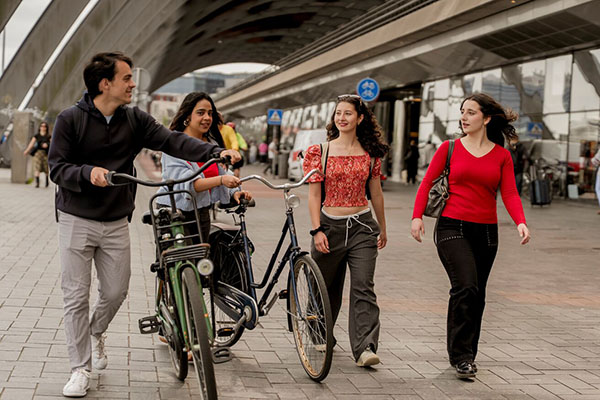 Academic citizenship is a guiding principle for the new educational vision. It is described there as the responsibility of staff and students to contribute to the university and to society – now and in the future – through independent and creative thinking, social engagement and ethical conduct.
As moderator and student assessor, Loes Broekhuijsen will guide us through the UvA Education Day programme, where we translate academic citizenship into teaching practice. We explore questions such as: What does academic citizenship mean in your discipline and in your classroom? How do you give students room to take responsibility – for their learning, for one another and for society? And how do you ensure that your own teaching practice evolves accordingly?
In conversation with Gert Biesta: conscience formation in education
Internationally renowned educationalist Gert Biesta argues that education is more than the transfer of knowledge or the acquisition of skills. Through his tripartite model—qualification, socialisation and subjectification—he highlights that education should also contribute to forming people as autonomous, responsible subjects.
In a recent opinion piece in Trouw, Biesta argues that broader education falls short as long as teaching does not confront students with the question of what they want to do with their knowledge and what they can do—and what responsibilities are at stake. In a video interview, he discusses this conscience formation with Professor of Legal philosophy and Legal ethics Iris van Domselaar, who places the professional and ethical formation of law students at the centre of her teaching and research.
The conversation between Gert Biesta and Iris van Domselaar has been pre‑recorded and will be shown during the day. Afterwards, education scholar and professor Monique Volman will connect Biesta’s ideas to educational practice and the UvA’s new educational vision. A conversation that touches the heart of academic citizenship—and what you, as a lecturer, put into practice every day.
A celebration of education
UvA Education Day is an annual celebration of education, specifically for lecturers and education professionals at the UvA. Together, we focus on education at the UvA, share and question ideas, and explore themes that enrich teaching and learning.
With inspiring speakers, captivating workshops from all UvA faculties, opportunities to socialise during the networking lunch, and the presentation of the UvA Education Awards and UvA Thesis Prize, it will be a special day dedicated to the future of education at the UvA. You are invited to attend the panel discussion with the faculty winners and research journalist and writer Simone Peek.
Programme
| 11.00 | Arrival with coffee and biscuits |
| 11.30 | Opening Education Day 2026 |
| 11.40 | Rector Magnificus Anniek de Ruijter |
| 11.50 | Interview Iris van Domselaar and Educationalist Gert Biesta, followed by a reflection of Monique Volman |
| 12.30 | Lunch |
| 14.00 | A choice of 9 engaging sessions or a panel discussion with faculty Thesis Prize winners and writer/journalist Simone Peek |
| 15.30 | Coffee break |
| 16.00 | Award ceremony: Education Awards and UvA Thesis Prize |
| 16.30 | Drinks |
Workshops Education Day 2026
During the Education Day, you can take part in a wide range of workshops offered by UvA colleagues from all faculties. The majority of the workshops are directly connected to the central theme of academic citizenship. Three workshops are facilitated by Education Ambassadors from the 2025 cohort. These lecturers received an UvA Education Award for their innovative or high‑impact teaching methods.
The maximum number of participants for this workshop has been reached.
Use Agile product thinking and OKR methodology to redesign your courses for genuine student ownership. Experience these tools from a student perspective, then turn them into concrete design choices for your own teaching. Learn how to invite students to co-define success, build in reflection and reprioritisation, and shift control without losing academic rigour.
By:
Lucia Collará is a product leader and lecturer based in the Netherlands. She is currently Product Lead for the University Library (Uva | HvA) within the Digital Infrastructure team. With a background in commercial product leadership, she enjoys helping teams grow, mentoring young professionals, and making sure product work creates real impact.
How do you have meaningful conversations with students about AI in public communication? Using Amsterdam’s ‘AI imagineering’ case and the Moral Data City Hunt, you work with concrete dilemmas around AI‑generated imagery, such as trust, inclusion and responsibility. You make underlying values and tensions visible and discover how to use this approach to put academic citizenship into practice by facilitating dialogue and contributing to responsible innovation.
By:
Sebastian De Haro is Associate Professor in Philosophy of Science at the Institute for Logic, Language and Computation and the Institute of Physics of the UvA, working on the philosophy of science, physics, and technology, with a special interest in how scientific and technological practices shape public understanding.

Linda Hofman is a PhD Candidate and future researcher at the Institute for Logic, Language and Computing at the UvA and the research group Moral DesignStrategy at Fontys University of Applied Science. Her “Moral Smart City” research aims to develop a techno-moral urban compass for inclusive, sustainable decision-making.
The maximum number of participants for this workshop has been reached.
Discover how affective learning, centred on values, attitudes, emotions and engagement, provides a solid foundation for academic citizenship. Experience approaches such as Deep Listening, which help students to listen, deal with discomfort and stay in conversation when perspectives differ. You will formulate a concrete step to give this dimension of learning more space in your own teaching and thereby strengthen academic citizenship among students.

By:
Jasper ter Schegget is an educational developer and teacher trainer (STQ) at the Institute for Interdisciplinary Studies. Within the Empowered Minds project, he supports programmes in implementing affective learning in the curriculum.
How do you make academic citizenship tangible in your course? In this workshop, you connect your subject matter to the history and future of Earth, life and humanity. You try out an AI tool that helps students see unexpected inter‑ and transdisciplinary connections between your subject and the world around them. You work towards a simple plan to embed this approach in your own course and give your teaching an extra, world‑oriented dimension.

By:
Esther Quadackers is a lecturer in big history and curriculum developer at the Institute for Interdisciplinary Studies. In her courses, she and her students explore surprising connections between highly diverse topics and the history and future of the Earth, life, and humanity.
The maximum number of participants for this workshop has been reached.
Help your students look to their future with greater confidence using the Designing Your Life (DYL) method. Experience how Design Thinking tools can reduce stress, increase ownership and give students more agency over their career paths. You will discover practical ways to integrate DYL elements into your own course, using an open toolkit that you can apply straight away.
By:
Bram Hoonhout works as a curriculum developer at the Institute for Interdisciplinary Studies (IIS). Prior to this, he worked at Leiden University, supported by a Comenius Senior Fellowship, on various Designing Your Life programmes to help students approach their future with greater confidence.
The maximum number of participants for this workshop has been reached.
AI literacy is becoming a core competency for every academic. Discover what AI literacy entails and why it is indispensable for the future of academic citizenship. Together, you will explore how to give different aspects of AI literacy—from understanding and critical thinking to responsible use—a place in your teaching at the UvA. You will translate this exploration into concrete implications for your own classroom practice.

By:
Dr. Ivar Kolvoort is Lead of UvA’s GenAI Living Lab. The lab explores, tests and evaluates GenAI applications in realistic educational contexts. Based on practical experience, it provides direct support to lecturers and students in the use of GenAI, while also building a broad AI literacy portfolio.
The maximum number of participants for this workshop has been reached.
Discover how to use theatre and cabaret to explore feedback, emotions and group dynamics in your teaching in a playful way. Experience how these approaches tap into different dimensions of learning and get students moving, both literally and figuratively. Leave with practical, ready‑to‑use ideas to build a strong culture of feedback and greater emotional awareness in your teaching.
By:
Chantal Albicher is a member of the Medicine master’s programme team, with a background as a gynaecologist and entrepreneur. She combines her medical experience with expertise in programmatic assessment and assessment for learning, and explores — through award-winning education projects — how theatre and imagination can contribute to person-centred, lifelong learning.
In 2025, Chantal has been awarded an UvA Education Award in the category Innovative Education for her project Kruk, Koffie, Kop houden. The award comes with the opportunity to deliver this workshop at the UvA Education Day.
The maximum number of participants for this workshop has been reached.
Discover what neurodiversity is, what it feels like to be neurodivergent, and how choices in teaching and learning affect neurodivergent students. See how a neurodiverse student population can contribute to better education for all students. Work, in a mix of a short presentation, discussion and small‑group tasks, on concrete, inclusive approaches for your own teaching.

By:
Sebastian van der Voort is a lecturer in the Department of Clinical Informatics, Faculty of Medicine, where he teaches subjects including mathematics, programming and AI. He makes his teaching more accessible to all students by drawing on his own experiences with neurodiversity.
In 2025, Sebastian has been awarded an UvA Education Award in the category Inclusive teaching. The award comes with the opportunity to deliver this workshop at the UvA Education Day.
The maximum number of participants for this workshop has been reached.
How can you use short interactive videos to create more personal and engaging learning in large groups? Explore the key pedagogical principles behind effective interactive video and design your own smartphone‑ready example. Experience how low‑effort tools can personalise learning, boost intrinsic motivation and turn research‑based insights into concrete teaching practice.

By:
Dr. Jeroen Lemmens is an assistant professor at the Amsterdam School of Communication Research, where his research focuses on the risks and opportunities of digital entertainment — both established and emerging. His current work centres on the role of time perception in popular media use, examining how users experience time spent on games and short-form videos.
In 2025, Jeroen has been awarded an UvA Education Award in the category Activating teaching. The award comes with the opportunity to deliver this workshop at the UvA Education Day.
About the speakers

Loes Broekhuijsen is studying Natural and Social Sciences (Beta-gamma) with a major in Physics. For her, academic development means thinking critically and placing issues in a broad context. Her interdisciplinary degree programme enables her to incorporate different perspectives even within her own specialisation. Because of her strong connection to the UvA – and to the Faculty of Science in particular – she is committed to contributing to the university community as student assessor.
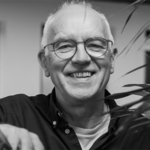
Gert Biesta is an internationally renowned educationalist. He is Professor of Education affiliated with the Faculty of Education at the University of Melbourne (Australia), Maynooth University (Ireland) and Western Norway University of Applied Sciences (HVL) in Norway. He is also a member of the Dutch Education Council. In his work, he raises critical questions about the direction of educational innovation. What do we actually mean by ‘innovation’? And amid all the changes, are we in danger of losing sight of what truly makes education meaningful?

Iris van Domselaar is Professor of Philosophy of Law and Legal Ethics at the UvA and founding director of the Amsterdam Centre on the Legal Professions and Access to Justice. Her research focuses on legal professional ethics as a lived practice: how do legal professionals engage with moral issues, professional courage and citizenship? In her inaugural lecture, ‘Law, Ethics and the Cry of Philoctetes: What Lawyers Owe Citizens’, Van Domselaar argued for a citizen‑centred approach to legal professional ethics. In her teaching within the law programme, the development of the lawyer as a critical, responsible professional takes centre stage—an approach that closely aligns with the concept of academic citizenship. Van Domselaar is an IP Fellow for the theme Resilient and Just Societies.

Monique Volman is a professor of Education at the University of Amsterdam. A central theme in her research is how teachers can contribute to meaningful learning for a diverse student population. From that perspective she focuses on issues like social justice, student agency and identity development. She aims to build bridges between educational theory and practice and closely collaborates with educational practitioners in primary, secondary, and higher education. As a faculty professor at the University Amsterdam, she promoted research into the universities’ own teaching and educational innovation practices and a culture of educational inquiry. She supervised/s several PhD trajectories in the field of higher education. Her work has been published in journals like Journal of the Learning Sciences, Teaching and Teacher Education, and Teaching in Higher Education.
About Education Day
The UvA Education Day is organised by TLC Central in collaboration with the TLC Network. Colleagues from all faculties are invited to participate. Together, we focus this day on the importance of education. In a relaxed and convivial manner, we delve into an annually changing topic or theme, which is the central focus of the Education Day.
Earlier editions

Academic education goes beyond knowledge transfer; we train students to become critical thinkers, ambitious researchers and engaged citizens.
UvA’s Education Day on 28 October invites us to reflect on how we navigate a complex and changing world as educators and members of our university. What compass helps us orient our work, our relationships, and our shared future in academia?
 Plenary session: Navigating with an Academic Compass
 Plenary session: Navigating with an Academic Compass
The day will open not with a traditional keynote, but rather with a short lifenote, in which Dr Mieke Lopes Cardozo anchors the theme of the Academic Compass in lived experiences through storytelling. As Associate Professor in Regenerative Education and Development Mieke invites us to explore the interconnected paths of regenerative educatorship, through the inner, communal, and whole-system paths of learning. From there, we’ll gather around a campfire conversation on stage facilitated by Regenerative educator, action researcher and writer Dr Koen Wessels, inviting multiple voices from members of our academic community to hear new perspectives. Embracing the full range of experiences and viewpoints present. In this campfire conversation, the following participants will join:
- Lyuba Nicheva, research master’s student Child Development and Education
- Roshn Najmeddin, junior lecturer Human Geography, Planning and International Development
- Farid Boussaid, associate professor of Middle Eastern politics at the Department of Political Science, director of the Amsterdam Centre of Middle Eastern Studies (ACMES), awarded an UvA Education Award 2024, category Student Activating Teaching
- Nithya Subramanian, support staff, Finance & HR administrator at the Central Teaching and Learning Centre, co-organiser of the Special Interest Group Fair Resilient Inclusive Societies
- Christa Boer, dean of the UvA Faculty of Social and Behavioural Sciences (FMG)
These conversations will later ripple outward into smaller campfire sessions, where everyone can engage in dialogue revolving around UvA’s educational vision, in a more intimate setting. At the end of the day, after the workshops, we’ll return together for a reflective and activating plenary with Mieke Lopes Cardozo as inquiry host, weaving the threads of what has emerged.
Staying on course in a changing world: a new educational vision
Political, social, and technological developments have a direct impact on education. To prepare students for this complex and dynamic world, the University of Amsterdam launched the project ‘Towards a New Educational Vision’, which will be rolled out in the academic year 2026-2027. In this process, we have embarked on a collective quest for a future direction that aligns with our values and vision on education. Join in on 10 campfire discussions to explore whether the formulated educational themes meet the educational practice. And let us gather key considerations to further refine our academic compass. The themes consist of f.e. Healthy learning environment, Self-directed learning and Academic Citizenship.
Challenge your thinking in the group sessions
1. Yes, and… The Power of Improvisation in Shaping Adaptable, Aware Professionals
2. Designing the Academic Compass: A Sprint Toward Student-Centred Learning
3. Bridging Differences: Teaching Students to Collaborate Based on Roles
4. Authentic Assessment
5. Navigating an Uncertain Future: The Pedagogical Compass
6. Renewing Academic Education: Affective Learning to tune our Academic Compass
7. Exploring SoTL: A Compass for Evidence-Informed Teaching
8. Know Thyself: Cultivating Authentic Professional Growth in our Students— What Can I Do?
9. Working Together in Multi-Cultural Teams: Cultural Intelligence
10. The Impact of GenAI in Education: A 5-step Plan for a Future-Proof Curriculum
11. Using Data to Improve Student Succes & Student Experience
Awards for lecturers and students
Good and inspiring education is of great importance to the UvA. That is why we present the UvA Education Awards to exceptional lecturers and courses, education projects or -teams that contribute to this. In addition, the best and most original Master’s theses written at the UvA are rewarded each year with the UvA Thesis Prize. The jury judges the submissions by scientific quality and originality. At the Education Day you can attend a panel discussion with the faculty winners and research journalist and writer Simone Peek.
Programme
- 11:30 – Walk-in with brunch
- 12:00 – Opening of the UvA Education Day by Dr Mieke Lopes Cardozo
- 12:10 – Presentation of the UvA Education Awards and the UvA Thesis Prize
- 12:30 – Navigating with an Academic Compass by Dr Mieke Lopes Cardozo, including an interdisciplinary campfire discussion on stage, facilitated by Regenerative Educator Dr Koen Wessels.
- 13:15 – Coffee break
- 13:30 – Interdisciplinary campfire discussions centred around UvA’s educational vision or Panel discussion with UvA Thesis Prize faculty winners and research journalist and writer Simone Peek
- 14:15 – Coffee break
- 14:30 – A choice of 11 in-depth workshop sessions
- 16:00 – Coffee break
- 16:15 – Plenary closing
- 16:45 – Drinks
About the chairs of the day
- Dr. Mieke Lopes Cardozo is Associate Professor in Regenerative Education and Development at the Amsterdam Institute of Social Science Research, and part of UvA’s Governance and Inclusive Development Research Group. She is co-founder and director of the School of Regenerative Educators, a training and research organisation for professional development of educators and education leaders. Mieke’s transdisciplinary teaching, supervision, research and writing focuses on the role of education systems in processes of regeneration, peacebuilding, social justice and inclusive development. She is chair of the Fair, Resilient and Inclusive Societies (FRIS) education innovation scholarship programme, based within UvA’s Teaching and Learning Centre and the Institute of Interdisciplinary Studies. She co-initiated HOT – Hoger Onderwijs in Transitie.
- Koen Wessels is an educator, facilitator, and action researcher specializing in regenerative education. He is the co-founder of the School of Regenerative Educators and works as a core lecturer in Change Making at the University of Amsterdam’s transdisciplinary bachelor’s program in Computational Social Science.

How do we stay connected in times of academic transitions, such as hybrid learning, AI and the international classroom?
Keynote: Connecting the Dots
 Jessica Taylor Piotrowski,
Professor Communication in the Digital Society
In today’s rapidly evolving academic world, success often hinges on our ability to connect the dots—integrating various relationships to support a thriving academic environment. This keynote will explore how the power of connection can be a game-changer for higher education.
We will examine how connecting the dots between faculty members can benefit education. The crucial partnerships between faculty and support staff will also be highlighted, showing how these relationships elevate education in powerful ways. Of course, at the heart of education is the interwoven connection between faculty, student, and course content. Here, we will discuss concrete strategies for cultivating this connection to best support engaged learning.
Join us, Tuesday 22 October, as we uncover strategies to connect the dots!
Programme
The UvA Education Day is a celebration of education. Together, we focus on the importance of teachers and the education they provide within the UvA. The programme of the upcoming UvA Education Day reflects current trends within the UvA. There will also be plenty of time for group sessions and unattached networking. During the sessions, you will explore a sub-theme in which you are interested together with colleagues.
The programme consists of:
- 11:30 Walk-in/brunch and meeting lecturers and colleagues from all faculties
- 12:15 Opening by Rector Magnificus Peter-Paul Verbeek and chair Dr. Toni Pape
- 13:00 Keynote Connecting the Dots by Prof. Jessica Piotrowksi
- 13:35 ceremony UvA Education Awards
- 14:00 Group sessions, with a choice of 10 diverse topics (90 minutes)
- 16:00 ceremony UvA Thesis Prize 2024
- 16:30 Closing & drinks
10 group sessions
Group session 1: Who is the self and who is the other?
Group session 2: Fair and inclusive assessment
Group session 3: Let us rally together! Activating change: transforming higher education to address societal challenges
(NL) Group session 4: Wie is… De Drog (in Dutch only)
Group session 5: Connected in independence – How to strengthen collaboration between students outside lectures
Group session 6: Inclusion and connectedness – Teaching and learning strategies to enhance inclusion and connectedness in the international classroom
Group session 7: Deep Democracy in the classroom
(NL) Group session 8: Panelgesprek UvA-scriptieprijs 2024, met Abdelkader Benali (in Dutch only)
Group session 9: Sensing the connection
Group session 10: The power of autonomy and connection in education
About the chair of the day
 Dr. Toni Pape is the chair of the day of the UvA Education Day 2024. He works as a researcher and teacher in Media studies at the University of Amsterdam. His research focuses on the aesthetics of contemporary television and video games. Toni teaches mainly in the Bachelor’s programme ‘Media and Culture’ and the Master’s programme ‘Television and Cross-media Culture’. He has also taught courses for the Netherlands Institute of Cultural Analysis. In 2019, his course ‘Introduction to Video Game Studies’ received the Humanities Faculty’s Teaching Award. In his courses, Toni likes to bring students together through blended learning, peer reviewing and research-creation workshops.
On Tuesday 23 May, the UvA Education Day 2023 took place at the Tolhuistuin in Amsterdam Noord, with Dr Maryn Wilkinson as chair of the day.
Practicing limitless thinking together, discovering the possibilities of imagination and stepping outside your comfort zone were the main focuses. Keynote speakers Prof Dr Finn Thorbjørn Hansen and Dr Kim van Broekhoven took participants into the world of creativity, imagination and ‘Deep Wonder’.
The UvA Education Day 2022 took place Thursday 6 October. This day offered lecturers and staff interdisciplinary live encounters and knowledge sharing across the university in light of the theme ‘Learning as a Community’.
The keynote of Dr David Kellermann’s showcased advantages and disadvantages of the hybrid campus. Lecturers and staff joined several community cafés and workshops, and the Central Student Council and ASVA Student Union announced the UvA Lecturer of the Year 2022.
The UvA Education Day is an event to share, discuss and anticipate inspiring ideas, projects and practical examples from education, and look ahead to the (near) future of education.
The UvA Education Day 2021 was an online event. Watch the full recording here.