






Perusall as a digital tool to promote student motivation and engagement
18 UvA lecturers, from all faculties, participated in the first batch of the Education Research Fellows programme, in which they researched educational innovations in their own teaching practices for 2 years. The first batch ran from September 2021 to July 2023 and was divided into 4 themes: Online and blended learning, (Formative) assessment and feedback, Didactics within specific disciplines, Pedagogical approaches.
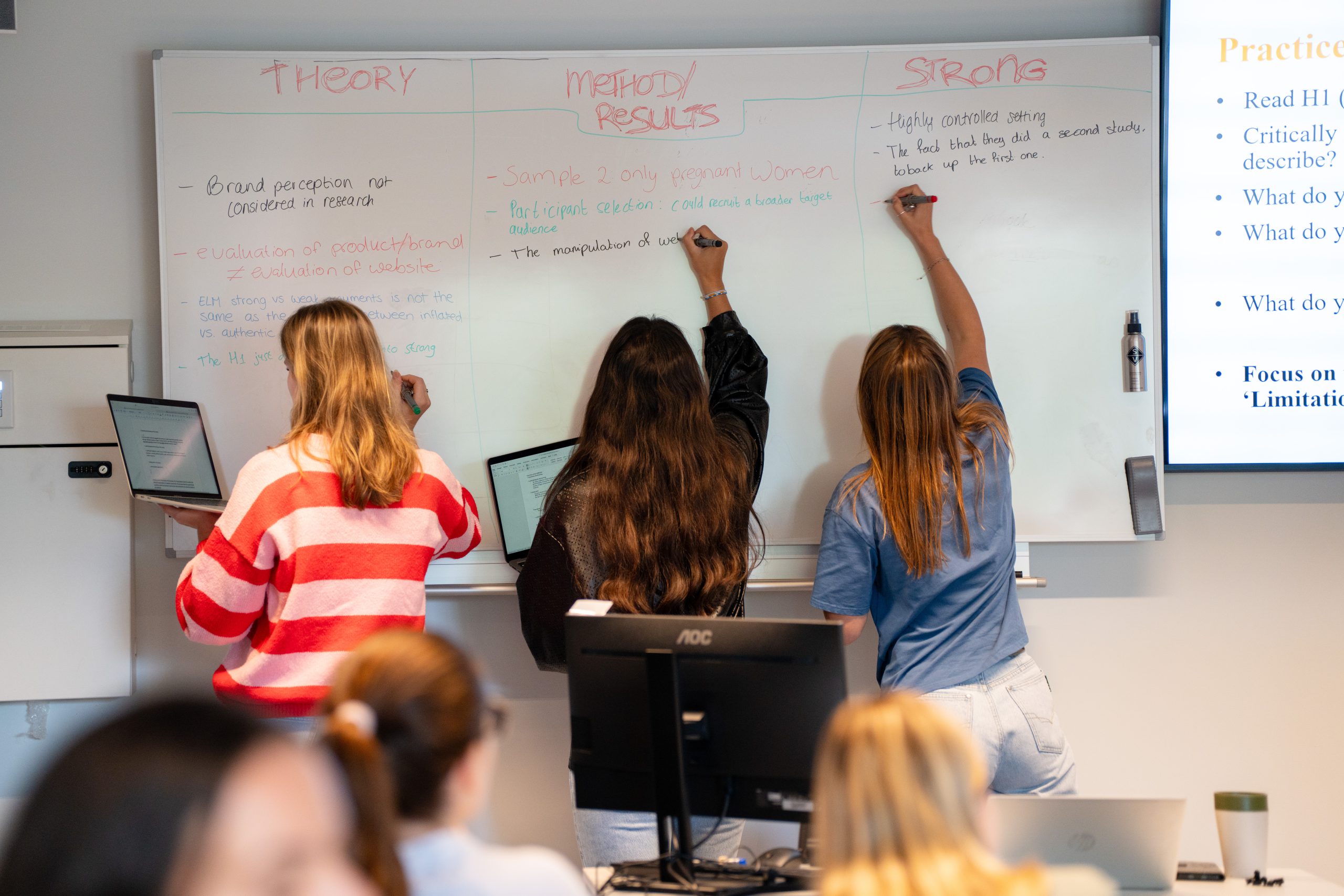
 Dr. Karin Venetis, as a Research Fellow within the Online and Blended Learning theme, researched digital tools to promote student engagement. Her research focused on active learning behavior and how this can be encouraged using online activation software Perusall. This is a “social annotation tool” that encourages students to prepare and discuss lecture material together online before college. Despite the often positive effects of these types of tools on study behavior and/or outcomes, they also appear to evoke resistance and are often less effective in student perception than the objective results show.
Resistance to use of tools
After Karin attended the presentation of the creator of Perusall – Professor Mazur – at the UvA Education Day a few years ago, her interest in this tool was sparked. After experimenting with Perusall through a beta version and an FNWI Grassroots project, she heard about the research fellow track through TLC EB, in which she is involved for 0.1 fte. That seemed like a good time to join as a research fellow and conduct more structural research.
“In September 2021, I started the official research, which has now been completed. My main research question was: how can you encourage active learning behavior in students, without reducing, and even increasing, students’ motivation to learn (more)? Studies have shown that tools that help students learn more actively can be very effective and improve student learning outcomes. However, students also feel pressured by these types of tools and find that these resources add more effort and time to their studies. They also experience a loss of autonomy to do things their own way.” These negative side effects of using digital tools were a big driver of the study. How to break through this resistance?
Experiment with individual positive feedback on Perusall usage
“In the experiment I conducted during this research, half of the students received additional individual positive feedback from the teacher on their Perusall usage and the other half did not. This study found that when a teacher acknowledges and compliments a student’s individual effort, the student is more motivated to do their best. Also, the student experiences a greater sense of autonomy in using these resources compared to students who do not feel seen by the teacher. It was found that even in large student groups, the teacher can create the difference in how students interact with their college preparation and most importantly, how they experience the study.”
Positive effects of additional positive feedback
Karin Venetis’ research suggests that the teacher influences how students behave in and perceive their Perusall assignments. Positive feedback by the teacher increases students’ perceived competence, while reducing students’ sense of loss of autonomy when using these systems. “It is important to note that students do not necessarily do significantly better. However, they do perceive the extra effort they put in as much more positive and continue their craft with more intrinsic motivation than the students who did not receive positive feedback.” The study clearly shows that students find lectures more interesting and participate more confidently in discussions when they prepare them using Perusall (compared to their “normal” preparations). Karin’s research provides interesting insights on how to motivate students to use this tool and she has applied this in an EB course.
Education Research Fellows Programme: unique and inspiring track
“The added value of this research fellow track is tremendous. You get time and opportunity to set up the research, carry it out and turn it into something workable. The support from TLC/UvA is unique and very inspiring, especially if you have a busy job within the UvA: It is nice when you get time to research your teaching in more detail. The project leaders are super flexible and helpful. I got a lot out of them. Both group and individual meetings are organized and it’s up to you what you take advantage of. The contact with the other research fellows during the course has also been very good and constructive.”
Tip for future research fellows
“The mores within educational research differ greatly from the research mores within psychology and marketing, where I come from, so I did run into that. I learned that SoTL research is something very different from pure scientific research. But above all, let yourself be included in the process that is offered. Even though research questions within the world of education have to meet very different requirements than what you might be used to within your own research discipline, you have all the time you need to formulate good research questions and you are well guided in that.”
Karin Venetis studied psychology in Groningen and then received her PhD in Marketing from the Faculty of Economics in Maastricht. She then combined academia with the marketing consulting practice. At the UvA, she is affiliated with the Faculty of Economics and Business Administration as a marketing lecturer and is responsible for the Executive (part-time) Master of Business Administration program. In addition, she is responsible for teacher professionalization within the newly established Teaching & Learning Centre of the EB and has for many years acted as a quality controller and intermediary between the Business Administration Master thesis students and their (external) supervisors. Karin is also a confidential advisor at the UvA.