







Misconception 9: Active learning only benefits fast learners
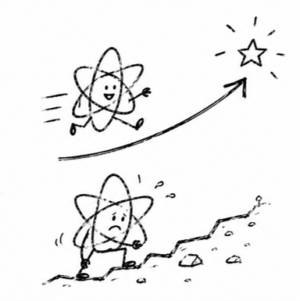
The effect of active learning is actually very broad. Studies that demonstrate positive effects of active learning in STEM come from many countries and disciplines, and they report gains of active learning by essentially the entire student population. Not just the top-performers.
Moreover, studies show that active learning even narrows achievement gaps for women, minorities, first‑generation and other under‑represented students in STEM.
Offering a variety of learning methods thus adapts to a broad range of students, and those who struggle keeping up with high paced lectures can learn more and develop their skills during active learning activities. This in turn can strengthen the key motivational ingredients described by Ryan and Deci’s Self-Detemination Theory; autonomy, competence and relatedness. Moreover, it creates more moments for students to experience positive achievement emotions such as pride and enjoyment, which are powerful drivers of sustained motivation and persistence.
The gains of active learning are observed across the whole student distribution. That indicates that all learners, including those who need solitary practice, benefit.
- Build in individual thinking time before any discussion, to prevents faster students from immediately taking over and gives others time to get started.
- Use mixed‑difficulty questions in the same activity. Start with an accessible question, then move to more challenging assignments.
- Structure roles in groups so everyone contributes and rotate them, to avoid one fast student doing everything and ensures others practice reasoning and articulation.
- Don’t only answer the quickest hands. Walk to quieter groups, ask them to talk you through their thinking, and scaffold the next step so they can participate meaningfully.
- Use low‑stakes formats to lower the risk of “being wrong” with for example voring tools, mini‑whiteboards, or anonymous online responses to make it safer for less confident students to commit to an answer and learn from feedback.
- Close activities with a short, clear summary of the key idea
- End a teaching session by briefly re‑articulating the main concept and common pitfalls.
- Offer easily accessible optional extra practice for students who want it, for example by a digital quiz (in Canvas) or practice exams
- Design tasks with built‑in levels: Part A (basic), B (application), C (extension). Everyone does A, most do B, fast learners can move on to C.
- Have some extra challenging bonus material at hand for students who go fast and like the extra challenge.
- Or point them to a short extra reading, a more advanced problem, or a simulation/online tool related to the topic, labelled clearly as “for those who want to go further.”
- Ask early finishers to write one good conceptual question or exam‑style problem on the topic, including the answer and a brief explanation. You can use strong ones later in class.
Aji, C. A., & Khan, M. J. (2019). The Impact of Active Learning on Students’ Academic Performance. Open Journal of Social Sciences, 7(3), 204-211. https://doi.org/10.4236/jss.2019.73017
Dzaiy, A., & Abdullah, S. (2024). The Use of Active Learning Strategies to Foster Effective Teaching in Higher Education Institutions. Zanco Journal of Humanity Sciences, 28(4). https://doi.org/10.21271/zjhs.28.4.18
Lorenzo, M., Crouch, C. H., & Mazur, E. (2006). Reducing the gender gap in the physics classroom. Am. J. Phys., 74, 118-122. https://doi.org/10.1119/1.2162549
Pekrun, R. (1992). The Impact of Emotions on Learning and Achievement: Towards a Theory of Cognitive/Motivational Mediators. Applied Psychology, 41(4), 359-376. https://doi.org/10.1111/j.1464-0597.1992.tb00712.x
Rahman, A. A., Sahid, S., & Mohamad Nasri, N. (2022). Literature review on the benefits and challenges of active learning on students’ achievement. Cypriot Journal of Educational Sciences, 17(12). https://doi.org/10.18844/cjes.v17i12.8133
Ryan, R. M., & Deci, E. L. (2020). Intrinsic and extrinsic motivation from a self-determination theory perspective: Definitions, theory, practices, and future directions. Contemporary Educational Psychology, 61, 101860.
Theobald, E. J., Hill, M. J., Tran, E., Agrawal, S., Arroyo, E. N., Behling, S., et al. (2020). Active learning narrows achievement gaps for underrepresented students in undergraduate science, technology, engineering, and math. Proceedings of the National Academy of Sciences, 117(12), 6476-6483. https://doi.org/10.1073/pnas.1916903117