





Active Learning - Good Practices
Inspiration from our colleagues
Below, you will find some inspiring examples from UvA colleagues who have used active learning in the classroom. Over the coming years, many more ideas will be added to the collection.
Gamification
Student engagement may be increased by adding elements of gamification, such as competition.
Teams compete with each other by scoring points. Instead of regular end-of-course grading, teams start at 0, and collect points over time by completing various challenges related to the course materials.


Student panels
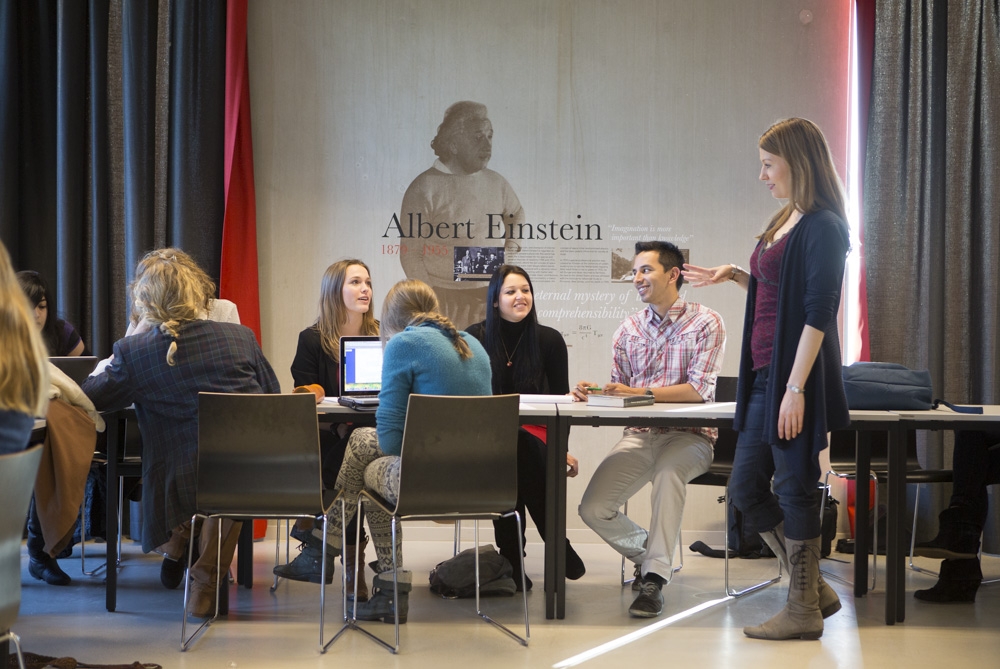
Student panels add interactivity to traditional lectures by incorporating active student participation.
Student panel sessions resemble conference panel sessions. The lecturer invites student panel members to the stage to participate as peers during the lecture. This may be done by asking questions, starting a discussion, or responding to queries, for instance.
Video assignments
This good practice focuses on students producing video as an assignment.
Information is increasingly visualised, in today’s society. Videos are fast-paced, easily accessible, and require their makers to focus on the most important points. For many teachers, however, setting video assignments is relatively new. In the description of this ‘good practice’, we aim to provide some practical pointers.


What is student engagement?
Encouraging student engagement is essential in higher education. It can transform simple actions like participating in class or enjoying a course into deep, meaningful commitment. Engagement could be the key to reducing student apathy and facilitating deeper learning. On the flip side, a lack of engagement can lead to negative outcomes for the student, their peers, and you as an educator. But what exactly is student engagement?

Video assignments
Studentpanels