







Opening statement
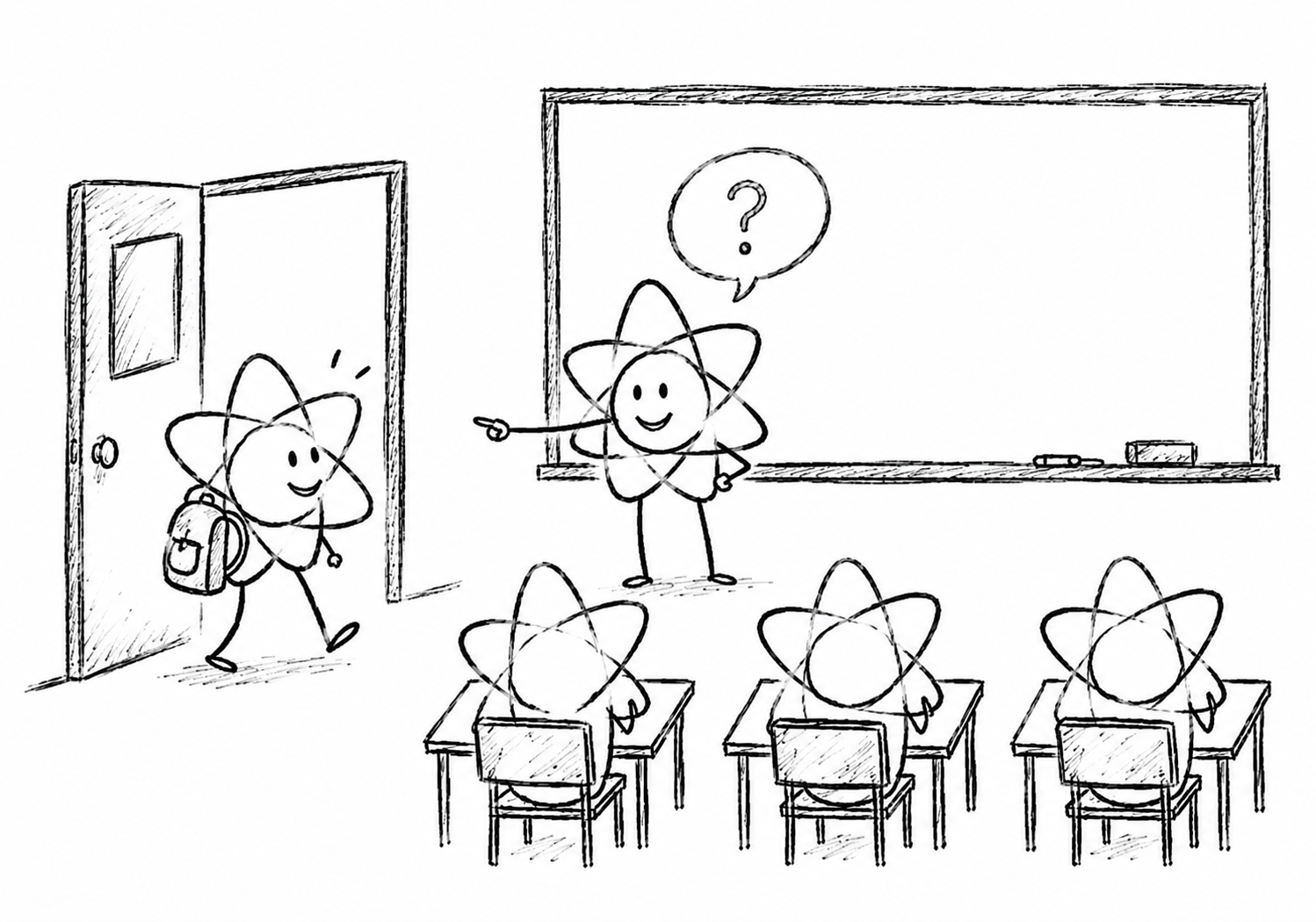
As students arrive, they immediately respond to a short, low-stakes question or statement related to the topic, so they start thinking and talking about the content before class officially begins.
Teaching complexity
Adopt an open, welcoming attitude and be ready to chat informally with early arrivals. Keep time tight when collecting answers so the activity feels energising, not like a full discussion.
Why it works
Students often enter the room distracted or hesitant, which makes it hard to gain their attention and connect them to the subject matter. This activity gently shifts them into “learning mode” as soon as they walk in. The aim is to activate prior knowledge, lower the threshold for speaking in class, and create a shared reference point for the rest of the session.
Five step plan
- Choose a simple prompt: Select a short, clear statement, dilemma, or question that links to your topic and students’ lives or interests, without being heavy or sensitive. For example, “If I could pick one cell type to research, it would be…”, “If it were possible, would you rather travel to Mars, or to Jupiter, and why?”, or “The first thing I think about when I hear ‘xxxxx’ is….”.
- Display: Put the prompt in large text on the opening slide or board so it is the first thing students see when they enter.
- Direct attention early: As students arrive, casually point out the prompt and invite them to think about their answer or briefly discuss it with a neighbour. If consistently used, it will soon become the standard.
- Collect brief answers: Once class starts, take 2-3 minutes to ask for a few answers. Acknowledge all contributions and avoid giving your own answer first (but share if you like).
- Optional: Reconnect later: If the prompt fits, return to it after explaining a key concept, or at the end of the lecture, and ask whether students would now respond differently and why. Or connect it to an example you’ve chosen to explain.
None.
Any.
- Keep the slide clean so the prompt is the clear focus.
- Start with simple either/or or multiple-choice prompts if students are shy, then move towards open questions.
- Use “think-pair-share” if few students are willing to answer in plenary.
- Reuse the best prompts across courses or years and refine them based on student reactions.
- Let UvA AI Chat help you find relevant prompts if you struggle to come up with ideas.
- A slide, large screen, or white/blackboard.
- A short list of pre-prepared prompts.
Key advice
Keep the prompt low-stakes, non-sensitive, and informal so students feel safe to respond and can easily connect it to the main topic. It’s about activating knowledge and breaking the ice; not debate.