





Hackathon Series genAI in Education

AI-persona to help in writing processes

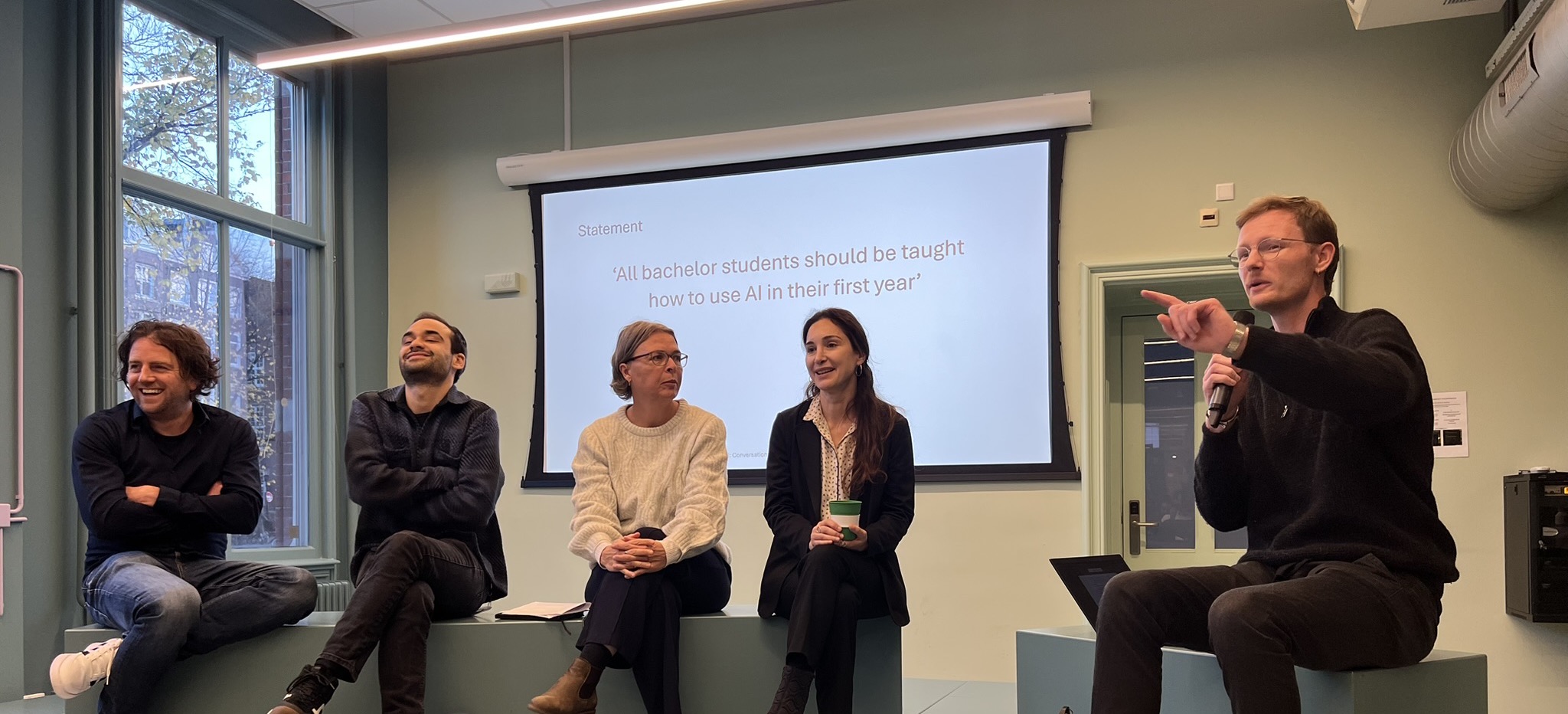
Join the first edition of the Hackathon Series genAI in Education. In this kick-off session, we dive into one of the most important questions in higher education today: how do you use AI responsibly during the thesis writing process?  this session focusses on thesis writing process. Guided by AI experts from the AI Literacy Team and the developers of UvA AI Chat, you will test cases, explore, and seek boundaries. What is allowed, what is possible, and where are the risks? By participating, you will contribute to a concrete outcome: an AI persona that supports students during their writing process within set boundaries and maintaining the authenticity of their work.

Event Hackathons genAI in Education: AI-persona in the writing process
Date & Time 10 december, 13.00-17.00h
Location TLC Central: Handboogstraat 2, Amsterdam
Language English
Organizers Koen van Elsen and Ivar Kolvoort

Please note! For this event, we aim to achieve as balanced representation of all faculties. For this reason, participants will receive confirmation of their registration one week prior to the session.

Sign up

Keep me informed on upcoming sessions

About this Hackathon Series

The UvA has its own UvA AI Chat, an AI tool developed for and by the university. In this hackathon series, we invite students and staff to actively participate in thinking about and shaping the future of AI in our education and research. During several sessions, we’ll explore the possibilities, limitations, and ethical frameworks of generative AI. We’re testing the system, designing new features (such as AI personas), and gathering feedback to make UvA AI Chat smarter, more reliable, and more usable for the UvA community.

The goal is to make it easier for students and lecturers to use UvA AI Chat. Also, to get insights in how your student or lecturer is working with this tool and what it is using for.

For who?

For students and staff (lecturers, curriculum coordinators, program directors, examination committees, and students) who:

  • are curious about AI in education and research;
  • want to experiment and contribute to developments of AI within the university;
  • enjoy being involved in an innovation process from the start.

Hackathon #1 on 10 December 2025

Together with programmers from UvA AI Chat, experts from AI Literacy (TLC Centraal), and the developers of the existing thesis persona from the Medicine department, we’ll explore the limits, possibilities, and risks. We’re testing the robustness of UvA AI Chat (can you “hack” it?) and gathering input to improve the system. This is where it all happens. Your input goes directly to the development team and forms the basis for the further development of UvA AI Chat and AI literacy within the UvA.

The first meeting in a series of hackathons will take place on Wednesday, December 10th. What will you do:

  • Work together on what you can and cannot do when writing a thesis;
  • Test an AI persona that guides students in the writing process;
  • Discuss everyone’s opinion of the AI ​​persona in small groups.

Help us build the future. Hack with us, brainstorm with us, and develop with us.
We’d love to see you at Hackathon #1!

Why?

  • Lecturers can gain insights into how students interact with the AI ​​persona.
  • Students can learn what they can and cannot do, allowing them to write their own product and simultaneously strengthen it through their own experiences. AI

Note: For the reasons mentioned above, this event would be even more valuable if groups of students and lecturers from different faculties registered, so that each faculty can gain its own insights. Do you have a group of students or colleagues who would like to participate? Invite them to this event and come together! And you’re just as welcome when you sign up by yourself.

Ideas or questions?

Do you have an idea for a design that could potentially be discussed/tested in a future hackathon? We would love to hear from you. We are interested in your input and are open to questions so that we can shape the next hackathons in this series.

Send an email to Koen