






Audio format: podcasting
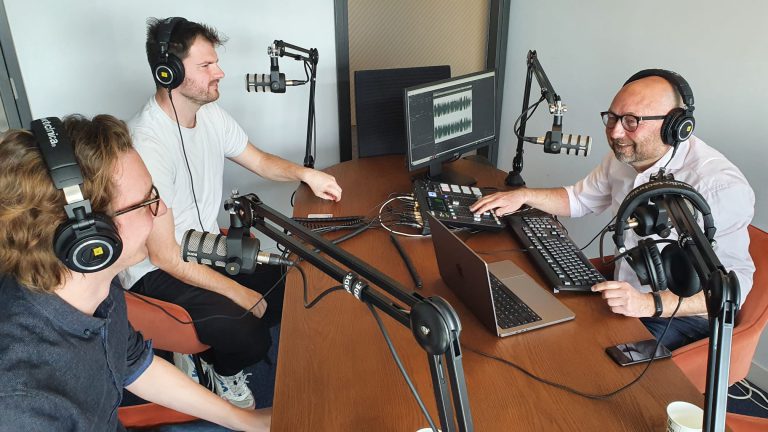
A podcast is particularly suitable for helping students to situate a topic within a broader context. For example, through a conversation with an expert, an interview with a professional, a discussion of a current issue or a reflection on experiences from professional practice. The voice, intonation and personal stories can add nuances that are less easily conveyed in a text or knowledge clip.
Podcasting: providing context and insight
Podcasting is therefore well suited to learning outcomes that focus on insight, perspective and context. For instance, you can ask students to listen to different views on a societal issue, invite a researcher to talk about choices made in a research process, or have an alumnus reflect on how subject-specific knowledge is applied in professional practice.
A podcast is generally less suitable for explaining specific theories, concepts or procedures that students need to remember precisely and be able to apply. Students often listen to podcasts while they are on the move or doing something else, and usually not with a notebook to hand. For key concepts and complex explanations, a short text, diagram, knowledge clip or targeted assignment is often more appropriate.
You can, however, link a podcast to a follow-up assignment, for example by asking students to:
- identify the arguments, perspectives or dilemmas they recognise;
- compare a position taken in the podcast with the literature;
- analyse a practical example from the podcast;
- prepare questions for a session or discussion.
In this way, the podcast becomes not just something to listen to, but a trigger for connecting theory, practice and different perspectives.