







Less grades, more code: student focus directed on learning how to program, not on deadline stress
In this best practice, Jelle van Assema and his colleague Martijn Stegeman, both working at the Institute of Informatics, describe how they redesigned a core course in the minor Programming to create more space for learning how to program, by reducing the focus on grades and deadlines, and put the emphasis back on actual and ample practice.
Course: Minor programming, Institute of Informatics
Students: 1st‑year BSc level, mostly 3rd‑year students, about 50 participants
Active learning design: No grades up front, an early exam, and adaptive follow‑up

Jelle van Assema
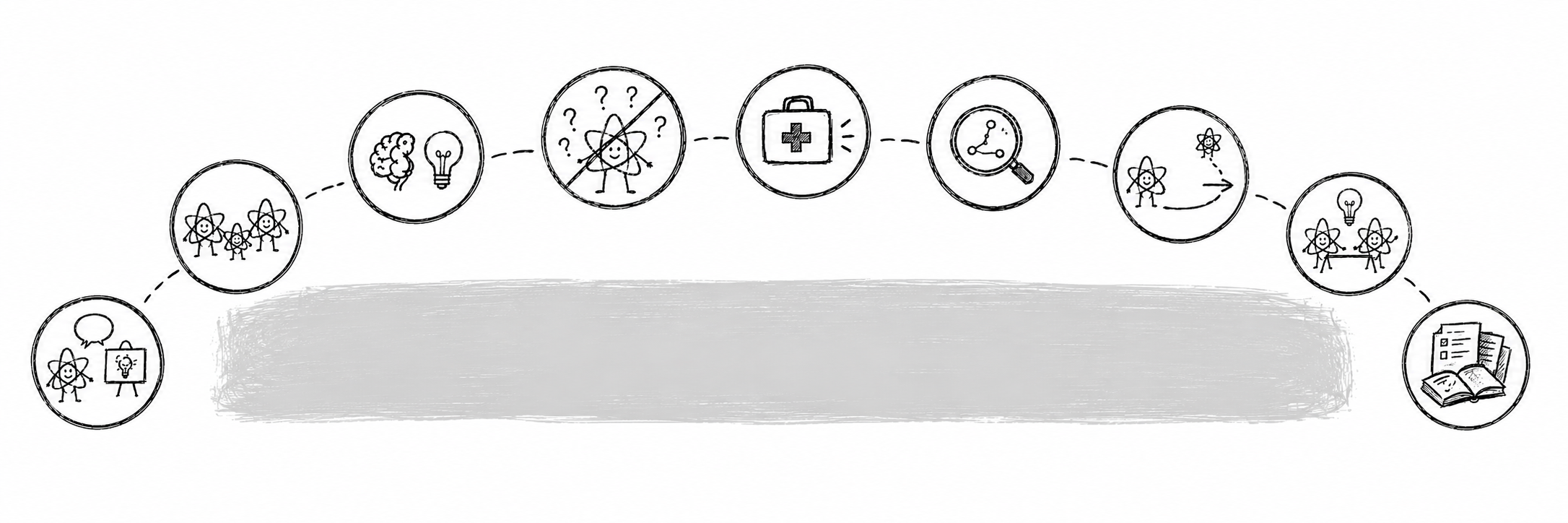
The 8-week course structure is built around one clear milestone: an early exam in week 5, and two distinct phases before and after that; see below.
In Jelle’s words, this setup “removes performance pressure and makes space for real study.” That was necessary, because programming courses often struggle with lots of over‑collaboration and various forms of fraud, including GenAI use; all driven by the difficulty and time‑intensity of learning to program and subsequent students’ urge to find shortcuts.
In the first 5 weeks, students practice with the material: weekly topics, auto-graded assignments, and a suggested schedule. Importantly: there are nog grades and no hard deadlines for assignments. The focus is on practicing and preparing for the exam.
The exam in week 5 is the central goal of the first part: learn enough programming to pass! It is specifically scheduled early in the course; it used to be in week 8.
After the exam, if a student passes they move on to new material that counts towards the final grade, via an oral assessment: students discuss work with a lecturer and explain details of their code. If a student does not pass, they work towards the retake in week 8. They can repeat and consolidate earlier material, or do fewer advanced parts. They get to take the retake while course is officially still running, preventing long waits, pressure from other courses, and stress for the retake.
Student experiences: A clear structure, and room to talk about tools

Martijn Stegeman
Strikingly, students stay motivated even though there are no grades or high‑stakes deadlines in the first phase. The clear structure and the alignment between exam and course work makes it clear for students why they’re doing the work.
And that eliminates much of the temptation to duck the work. It creates a culture where the question is not “Are you cheating?” but “Are you really learning from this?”. For Jelle and Martijn it is easier to address escape routes in a neutral way rather than as a policing issue. “We can openly discuss LLMs and co-working, without this creating awkwardness.” says Jelle.
Interestingly, students’ self‑reported time investment has not increased, even though the number of assignments has roughly tripled. Jelle and Martijn suspect this is because the repeating patterns in the assignments create a feeling of speed: after an initial struggle with the first few, the material clicks, and then students “fly” through the later ones. It also provides room to collaborate or use GenAI, and find out later whether you can really do it yourself. Students see their skills improve step by step.
Lessons and advice for colleagues
A key lesson for Jelle and Martijn is how this set-up changes the lecturer’s role from an examinator, to a coach, standing next to a student. Jelle noticed how email and conversations stopped being about extensions and rules, and started being about plans and learning strategies: How can I pass this course, what support do I need?
www.proglab.nl
For other lecturers, Jelle’s main message is that the success of this design depends heavily on the underlying structure of the course. In the first half, there are no grades, and yes, the exam does come up soon. But there are many automatic checks; students still get a lot of feedback and they can always ask questions. “If you clearly explained to your students ‘this is how it is’, and you validate why, your group will understand and adopt this standard, and get into the flow of the course.” states Jelle.
Get in touch and try it yourself
Jelle is open to being contacted by colleagues who are interested in this way of structuring a programming course. You can reach him at: j.vanassema@uva.nl. You can find more information about the Programming Minor at www.proglab.nl.