







Misconception 10: Active Learning means less content coverage
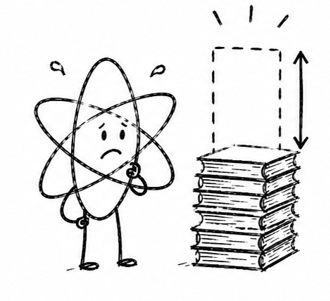
It’s easy to feel that every minute you spend on questions, discussions, or group work is a minute you’re not “getting through the material.” But the evidence from STEM education research shows that when you shift time from talking about content to having students work with content, they actually learn more, not less.
Active learning does shift what “coverage” means. Covering content is not the same as students learning content. Active-learning courses slow down just enough for students to process, connect, and apply core concepts. It can target higher levels in Bloom’s taxonomy than passive learning. And it is often seen that while lecturers aim for those higher Bloom levels with lecturing and written exams, it is hard to actually obtain and assess them.
In practice, many lecturers discover that students retain more and ask better questions when slightly fewer topics are explored more actively and meaningfully. In the often quoted Freeman review, students in STEM courses that used active learning, with the same syllabus and exams as passive courses, scored about 6% higher on exams and were 1.5 times less likely to fail.
- Identify the threshold concepts and core skills students truly need, instead of trying to mention every possible subtopic. What do you want students to understand and be able to apply not just now, but also six months from now? Use active learning activities to help students practice exactly those key concepts and higher-order skills during class time.
- Move basic details or lower bloom level skills to pre-class preparation, short videos, readings, or optional resources. This frees up contact time for deeper engagement and application.
- Assess specific topics or skills in active in-class assignments that form part of the final grade (or pass fail) rather than in a large final exam covering everything.
Aji, C. A., & Khan, M. J. (2019). The Impact of Active Learning on Students’ Academic Performance. Open Journal of Social Sciences, 7(3), 204-211. https://doi.org/10.4236/jss.2019.73017
Bonwell, C. C., & Eison, J. A. (1991). Active Learning: Creating Excitement in the Classroom. 1991 ASHE-ERIC Higher Education Reports. ERIC Clearinghouse on Higher Education, The George Washington University, One Dupont Circle, Suite 630, Washington, DC 20036-1183 ($17. https://eric.ed.gov/?id=ED336049
Brame, C. J. (Red.). (2019). Science Teaching Essentials. Academic Press. https://doi.org/10.1016/B978-0-12-814702-3.00014-7
Deslauriers, L., Schelew, E., & Wieman, C. (2011). Improved Learning in a Large-Enrollment Physics Class. Science, 332(6031), 862-864. https://doi.org/10.1126/science.1201783
Deslauriers, L., McCarty, L. S., Miller, K., Callaghan, K., & Kestin, G. (2019). Measuring actual learning versus feeling of learning in response to being actively engaged in the classroom. Proceedings of the National Academy of Sciences, 116(39), 19251-19257. https://doi.org/10.1073/pnas.1821936116
Dzaiy, A., & Abdullah, S. (2024). The Use of Active Learning Strategies to Foster Effective Teaching in Higher Education Institutions. Zanco Journal of Humanity Sciences, 28(4). https://doi.org/10.21271/zjhs.28.4.18
Freeman, S., Eddy, S. L., McDonough, M., Smith, M. K., Okoroafor, N., Jordt, H., & Wenderoth, M. P. (2014). Active learning increases student performance in science, engineering, and mathematics. Proceedings of the National Academy of Sciences, 111(23), 8410-8415. https://doi.org/10.1073/pnas.1319030111