







UvA Trends 2026
Academic Skills Revisited
Which skills in relation to AI do students of the future need in order to be successful in an ever-changing world? This is the question that we will discuss during UvA Trends 2026, a yearly event in which the most important didactic and technological developments in university education are highlighted.
Details
| Date | Thursday 19 February 2026 | |
| Time | 12:15 – 17:30h | |
| Location | KIT (Royal Tropical Institute), Mauritskade 63, Amsterdam | |
| Chair of the Day | dr. Ivar Kolvoort |
During UvA Trends, both Dutch and English will be spoken so that everyone feels welcome to participate. Although most plenary sessions will be held in Dutch, you are free to choose whether you speak Dutch or English during interactions and discussions.
Time schedule
| 12:15 | Lunch walk-in | |
| 13:00 | Opening speech by Rector Magnificus | |
| 13:25 | Keynote prof. dr. Kim Schildkamp | |
| 14.15 | Break | |
| 14:45 | Break-out sessions in two rounds of your choice | |
| 16:30 | Closing remarks | |
| 17:00 | Drinks |
Academic Skills Revisited in a constantly changing world

From the current academic year onward, all students have access to the UvA AI Chat. As generative AI increasingly becomes an integral part of education at the University of Amsterdam, it raises fundamental questions: what does this mean for academic skills, assessment, and the learning process? Which abilities become even more important in a time when AI can co-think, co-write, and analyse? Think of critical thinking, ethical behaviour, collaboration, and presentation skills, but also the effective and responsible use of AI tools.
During this afternoon session, we will explore what foundational level of AI literacy every student needs. How can we teach students not only to work with AI, but also to understand it, question it, and set appropriate boundaries? Using inspiring real-world examples, research insights, and dialogue, we will discuss how education can better prepare students for a labour market that is constantly evolving.
Keynote

| Dr. Kim Schildkamp: AI-Literacy Prof. Dr. Kim Schildkamp is a full professor at the University of Twente, where she heads ELAN, the department for teacher development. Her research focuses on data use and AI, as well as the professional development needed to support these practices. She frequently collaborates closely with school boards and schools in her projects. She developed the Data Team® method, a professional development intervention that is now used in several countries and has received the EAPRIL Best Research–Practice Award from the European Association for Practitioner Research on Improving Learning. She is also involved in the national growth fund programme Npuls, where she leads a project on data and AI literacy for teachers and students. In addition, she has worked as a visiting professor at SePU, Inland Norway University of Applied Sciences, where she studied how students can be actively involved in the use of data. She is a past president of ICSEI (the International Congress on School Effectiveness and Improvement). |
Programme
Opening speech
The Rector Magnificus opens UvA Trends with a technological philosophical speech on where we currently stand with generative AI in academic teaching at the University of Amsterdam.
Keynote
AI-GO: AI Literacy in Education for Teachers and Students
In this keynote, Prof. Dr. Kim Schildkamp explores the crucial role of AI literacy in higher education. She is co-developer of the AI-GO framework, published in June 2025, which serves as a guide for fostering AI literacy in educational settings. Using this framework, she will delve into key implications for education, addressing not only knowledge and skills, but also attitudes and ethics. She will also discuss possible approaches to assessing AI literacy.
Break-out sessies
Take part in two break-out sessions of your choice. Below is an overview of the available options. Please note only the third option is partly in English, the rest is in Dutch.
In this interactive session, we explore the balance between cognitive and affective learning in light of the rise of generative AI in education. What if AI does not primarily pose a technological challenge, but instead exposes a deeper question of personal and academic formation?
Using the Inner Development Goals (IDG) framework, we invite participants to reconsider what we mean by “academic formation.” What role do curiosity, value awareness, moral courage, and the ability to deal with uncertainty play in the curriculum? And what does this imply for assessment, student support, and teacher professional development?
This session offers both a thought-provoking intellectual exercise and concrete starting points for future-proof education, in which intellectual, moral, and relational dimensions are more explicitly interwoven.
Hosts:
 Jasper ter Schegget
Jasper ter Schegget is an educational developer at the Institute for Interdisciplinary Studies and is involved in the Empowered Minds programme. In addition, he is a University Teaching Qualification (SKO) trainer for the University of Amsterdam and Vrije Universiteit Amsterdam, and a curriculum developer for the Bachelor’s programme Beta-Gamma, where he previously served as Programme Director. His work focuses on inter- and transdisciplinary education, affective education, and learning in times of AI.
Brit Giesbertz
Brit Giesbertz is a teacher educator at the Teaching & Learning Centre Science, where she is responsible for the development and delivery of the University Teaching Qualification (BKO) programme. She supports teachers and academic programmes in strengthening inclusive and equitable education, with particular attention to the International Classroom. In addition, she is a trainer for the Visible Learning Pathways Programme, where she works on the meaningful integration of affective learning objectives in academic education
Students increasingly rely on generative AI in their daily study practices, sometimes in ways that—consciously or not—undermine their own learning. Strong GenAI literacy can help students turn these tools into supports for learning rather than shortcuts around it. In parallel, the EU AI Act mandates that all AI users must demonstrate appropriate literacy to make an informed deployment of AI systems. This breakout session builds on both these realities by walking through the AI tutor project, a hands-on project in the Medical Informatics MSc programme whereby students learn and embody GenAI literacy with the objective of building a GenAI-based tutor along didactic principles.
The session consists of a presentation on the AI tutor project and an interactive element where educators are encouraged to reflect and formulate educational principles to guide the responsible use of GenAI with a view to their specific course learning objectives. The goal of this session is to give educators the resources to inform and empower students on how to apply GenAI literacy principles to safeguard learning in students daily AI related practices.
Hosts:

Sophie van Dijke
Sophie is a second-year Medical Informatics master’s student specializing in AI for health. Originally studying medicine, she became interested in the place of technology in the future of medicine, and how to use this technology ethically and effectively. She currently works as a student research assistant in the TLC AI expertise group researching the safe and effective development of GenAI-based educational tools.
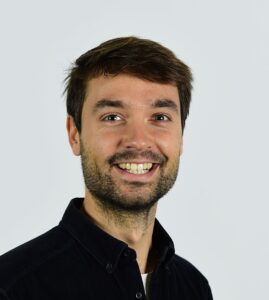 Erik Elings
Erik Elings is an educational advisor and project manager at Amsterdam UMC and a former lecturer. He works with generative AI in education, Virtual Reality, and blended learning. In his work, he contributes to educational innovation and teaches GenAI literacy to students and lecturers. Over time, he has developed a strong interest in the role of technology in learning.
In this workshop, you will get hands-on experience with generative AI in education. You start by deciding whether AI is suitable for a specific task, and which form is useful. There are some concretely developed education and support scenarios that you can immediately apply in your own work. Throughout the session, the TLC Central AI Innovation Team will provide close guidance: from working with the tools and answering content-related questions to translating the examples to your own professional context. Discover the opportunities of GenAI and the facilities and support the UvA offers in this area, and learn how to collaborate effectively and intelligently with generative AI.

Host: Koen van Elsen
Koen van Elsen is involved in AI innovation through TLC Central. He is passionate about researching ways to support education using modern technologies. His starting point is always to improve students’ learning processes, while keeping feasibility and workload for teachers in mind.
In this interactive knowledge-sharing session, we walk participants through a vision workshop we developed to help teaching teams make collective decisions about whether and how to use generative AI (GenAI) in their programmes. Drawing on the Visible Learning Pathways Programme – AI In-Depth Track, we show how teams can quickly chart a course by exploring three key questions: whether they want to formulate AI-related learning outcomes or learning pathways, how they can keep assessment valid and meaningful in an age of AI, and whether they wish to use GenAI as a learning activity to strengthen students’ learning. Using a concrete working format, participants will experience how this dialogue can be facilitated within a degree programme and will gain insight into our approach to using GenAI as a starting point for thoughtful and coherent curriculum decisions.
Hosts:
Ilja Boor
Ilja Boor is co-head of the Teaching & Learning Centre Science and co-programme leader of the university-wide Visible Learning Pathways Programme at the UvA. She focuses on educational innovation at the curriculum level and on the development of teaching teams, with particular attention to the meaningful integration of generative AI and affective learning in academic education.
 Vincent Tijms
Vincent Tijms is a trainer for the Visible Learning Pathways Programme, where he focuses on the use of GenAI in education. He also works as programme coordinator for the Research Master’s in Brain and Cognitive Sciences at the Institute for Interdisciplinary Studies. His teaching centres on interdisciplinary skills and critical thinking.
Closing with a student panel
At the end of the conference, we will enter into conversation with students themselves about questions concerning AI in relation to academic education. In this interactive panel, Bachelor’s and Master’s students, alumni and student assistants from the UvA will share their views and experiences regarding the use of AI in education and in the transition to their professional careers.
Do you have a question you would like to put to the student panel? Let us know in the registration form, or ask your question during the panel itself.
Chair of the day
 |
Dr. Ivar Kolvoort is an AI Advisor in Education at TLC Central. With a background in cognitive sciences and a passion for educational innovation, he is committed to integrating AI into education in a responsible manner. Additionally, as a postdoctoral researcher, he is combining psychological and philosophical insights to understand the effects of AI on our cognitive processes. |
Who will participate in UvA Trends 2026?
UvA Trends is a by invitation only conference to which around 80 UvA colleagues are invited, from all parts of the university. Colleagues with different areas of expertise will attend and contribute their thoughts from their role within the UvA on the impact of GenAI on our education. These include educators, education and programme directors and executive staff. But also colleagues from the network of UvA Teaching & Learning Centres (TLC), ICTO and ICTS.
Invitations to UvA Trends have been sent in a personal capacity. You can register via the link in the e-mail invitation. We would like to engage with you and other UvA colleagues and really appreciate your presence. Are you unable to attend? Then please pass on your invitation to a colleague with a similar role or position. Tell us his or her name in the registration form. More information? Please send an email to trends-event@uva.nl.
UvA Trends is organised by the network of UvA Teaching & Learning Centres (TLC) and the DLO-board