







back to activity finder
Tomato throwing – In the lecture
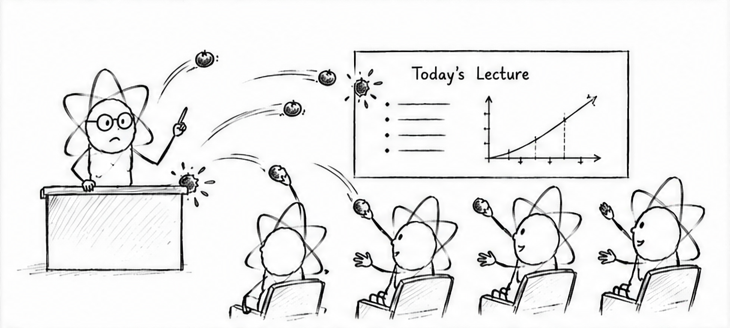
You deliberately build small mistakes into your explanations and ask students to call out (e.g. “tomato!”) when they spot them.
Teaching complexity
You use your traditional lecture style, but build-in a few well planned ‘tomato-moments’.
Why it works
Long, content-heavy lectures can overload students’ attention and invite passive acceptance of everything the lecturer says. Inviting students to detect deliberate mistakes keeps them mentally active, trains a critical mindset and normalises questioning and learning from error. The aim is for students to develop a sharp critical eye, see mistakes as learning opportunities, and low-stakes practice speaking up in a group.
Five step plan
- Set expectations: At the start, explain that you will occasionally include deliberate mistakes and that students should immediately call out (e.g. “tomato!”) when they think they spot one, especially while you are writing on the board and cannot see raised hands.
- Embed mistakes: During your explanation, regularly insert realistic mistakes or misconceptions in your reasoning, calculations, figures or slides. Plan them beforehand or improvise, whichever suits you best.
- Respond supportively: Each time a student calls out, respond appreciatively (even if it was not actually a mistake) by briefly explaining why and acknowledging that others may have had the same doubt.
- Signal unnoticed errors: Decide in advance how you will hint when no one spots a planned mistake (e.g., pausing, theatrically clearing your throat, or giving a backward glance) so students learn to recognise this as a cue to look more closely.
- Close and reflect: At the end of the lecture, thank students for their critical eye, briefly recap one or two key spotted mistakes and emphasise that you also make (and welcome) accidental corrections so they feel increasingly confident to speak up.
None.
Lecture hall.
- In large groups, manage time and the number of deliberate mistakes carefully so “tomato moments” stay focused and do not derail your main line of reasoning.
- When someone spots a mistake, let students briefly discuss with a neighbour whether they agree it is an error and why, before you give your explanation.
- Gamify the activity by giving a point or small reward to the first student who correctly identifies each mistake, while varying who you call on so the same student does not win every time.
- None specific: Can be used in any lecture or tutorial setting with your usual materials.
Key advice
Start with simple, low-stakes examples before introducing more complex errors.