






Explain to a child
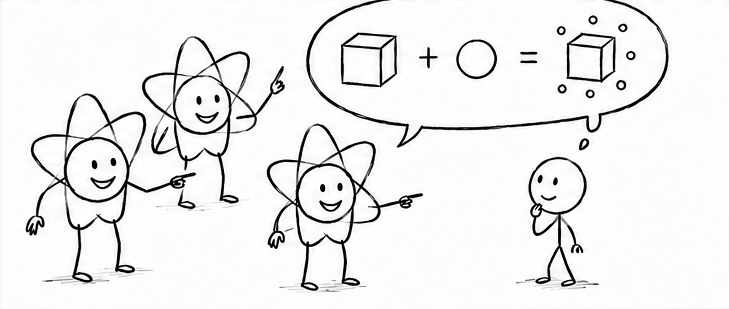
Students work in small groups to prepare and deliver a simple, layperson explanation of a complex concept, revealing how well they truly understand it.
Teaching complexity
Be open to creative or “far-fetched” ideas, and at the same time encourage students to avoid jargon and use clear analogies or everyday examples. Set clear expectations for what a “good” explanation looks like (e.g., accuracy, simplicity, structure) and guide peer feedback with focused prompts.
Why it works
Richard Feynman, Nobel Prize winner in physics, believed that “if you cannot explain something in simple terms, you do not understand it at all”. Students often overestimate their understanding until they try to explain a topic clearly to someone with no scientific background. This format makes students unpack each step of their reasoning and language. The aim is to deepen both their conceptual understanding and their awareness of their own thinking.
Five step plan
- Select concepts: Decide in advance which concepts, phenomena, assignments, lab techniques, or coding problems students will explain. Ideally, distribute different topics across small groups of 2-4 students.
- Explain assignment: Clearly state the task, the available working time, and the presentation length, and explain that feedback will be informal, with an emphasis on positive, constructive comments.
- Explore understanding: Let students work out what the concept really means, what they still do not fully understand, and how to explain it to a layman. They can use their study materials, the internet, and (if you allow it) UvA AI Chat.
- Create explanation: Students work-out their explanation on a whiteboard, flip chart, large sheet of paper, or a single slide.
- Present and review: Each group gives a short presentation in simple language while the audience acts as laypeople, asks clarifying questions, and gives feedback on clarity and jargon, focusing first on what worked well.
None or formative: You can use peer and self-assessment as formative assessment.
Small group tables for working. Optional: U-shape for presenting.
- To save time, use half-group presentations or have only one volunteer group present per topic, and visibly appreciate volunteers while keeping the feedback tone mainly positive.
- Let student teams work on different topics or choose a topic they found difficult themselves, so they can use the explanation to finally master it.
- Ask students to include at least one visual or metaphor in their explanation to make abstract ideas concrete.
- Decide beforehand whether and how GenAI may be used; you can even let an AI persona in UvA AI Chat act as the “layperson” who reacts to student explanations.
- When using this as in-class assessment, design a very short, clear mini-rubric so students and TAs know exactly what is expected.
- A list of suitable concepts, problems, or techniques to assign per group.
- Space and materials for preparing and presenting (boards, paper, or slides).
- A short checklist or mini-rubric to focus presentations and peer feedback on clarity.
Key advice
Create a safe, informal atmosphere that emphasises strengths, offers clear feedback guidelines, and openly welcomes mistakes as part of learning.