


Video & audio format: interview/podcast
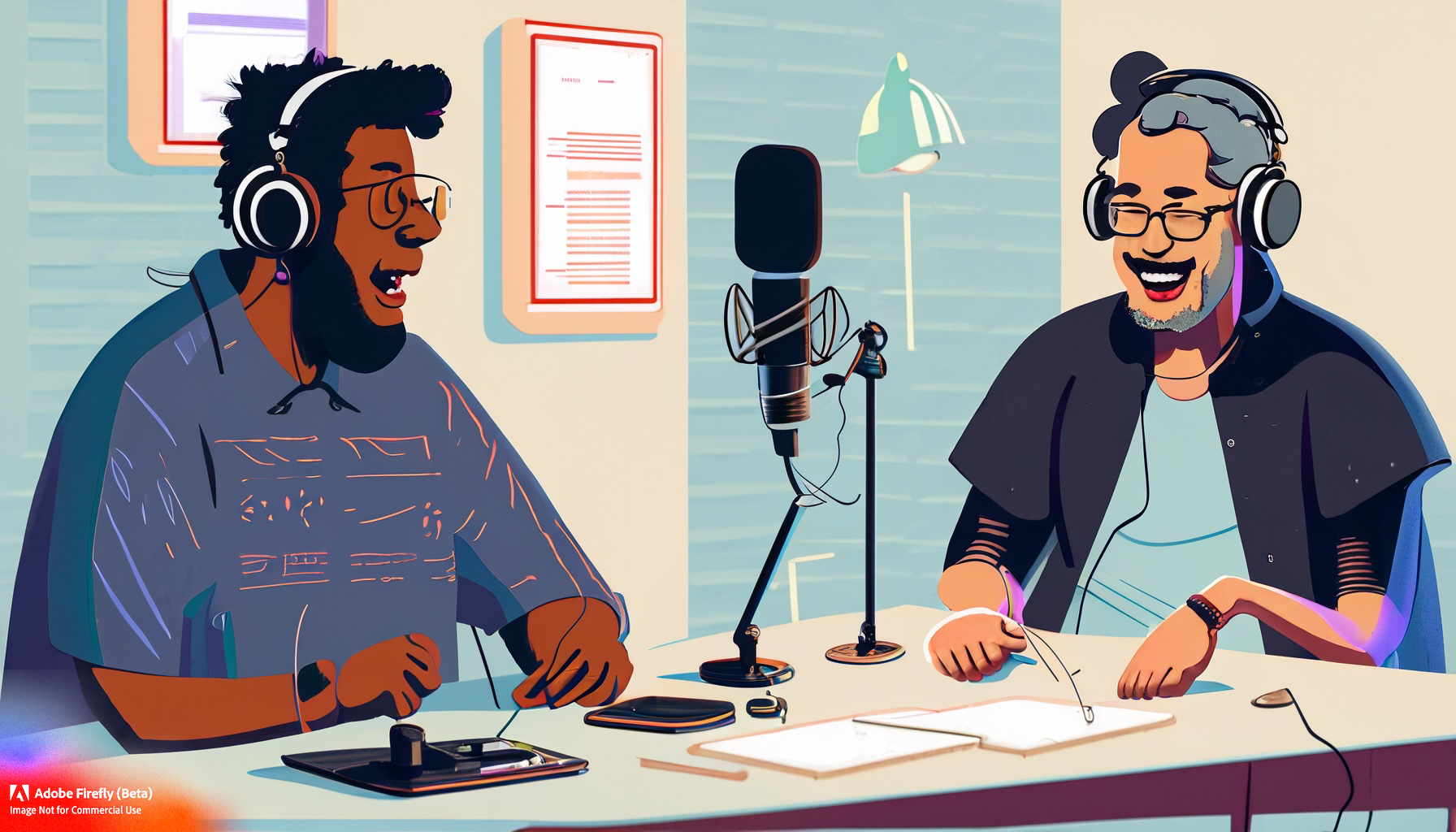
A knowledge clip can take the form of an interview or a podcast between two (or more) people. This enables students to learn from an expert or develop their conversation skills. Recordings can take place in a studio or on location.
An interview or podcast (or vodcast if it includes video) is particularly suitable for helping students to place a topic in a broader context. For example, through a conversation with an expert, an interview with a professional, a discussion of a current issue or a reflection on experiences from professional practice. The voice, intonation and personal stories can add nuance that comes across less clearly in a written text or knowledge clip.
Podcasting therefore works well for learning objectives that focus on insight, perspective and context. For instance, you might ask students to listen to different views on a social issue, invite a researcher to talk about the choices made during a research process, or have an alum reflect on how disciplinary knowledge is applied in professional practice.
An interview or podcast is usually less suitable for explaining specific theories, concepts or step-by-step procedures that students need to remember precisely and be able to apply. Students often listen to podcasts while travelling or doing something else, usually not with a notebook at hand. For key concepts and complex explanations, a short text, diagram, knowledge clip or targeted assignment is often more appropriate.
You can, however, link a podcast to a follow-up assignment, for example by asking students to:
- identify the arguments, perspectives or dilemmas they recognise;
- compare a position expressed in the podcast with the literature;
- analyse a practical example from the podcast;
- prepare questions for a session or discussion.
In this way, the podcast becomes not just listening material, but a starting point for connecting theory, practice and different perspectives.
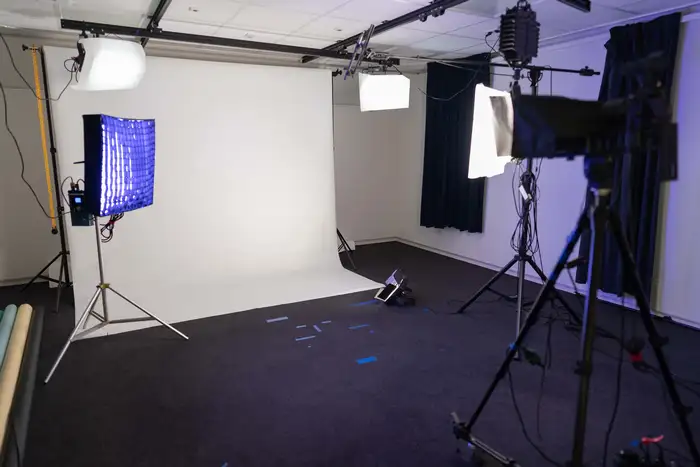
Recording in videostudio
Studio recording You can have an interview or dialogue recorded in the videostudio or on location. Various formats are possible:
- An interview-style dialogue: two lounge chairs, a rug, a plant and a small table.
- A consultation-room setting: a desk with a laptop and office chair, with a chair opposite (e.g. a doctor–patient conversation).
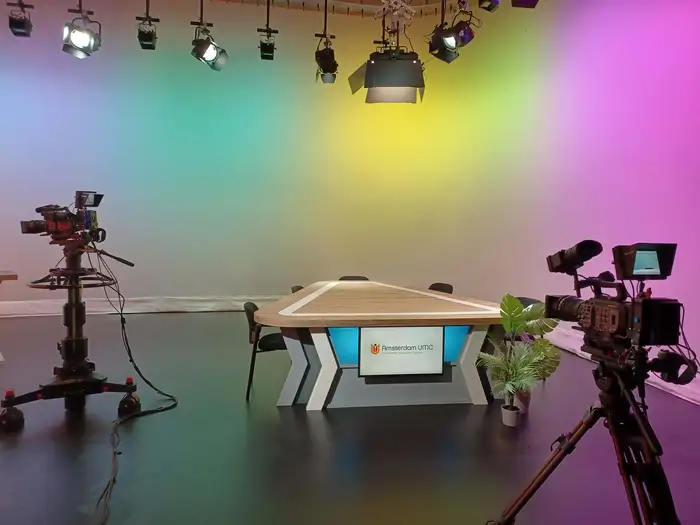
- A multi-person discussion; if desired, the talk show table can be used.
An advantage of using the studio is that all facilities are available. Multiple cameras can be used and the set can be lit as required. The interview questions or script should be carefully prepared in advance.
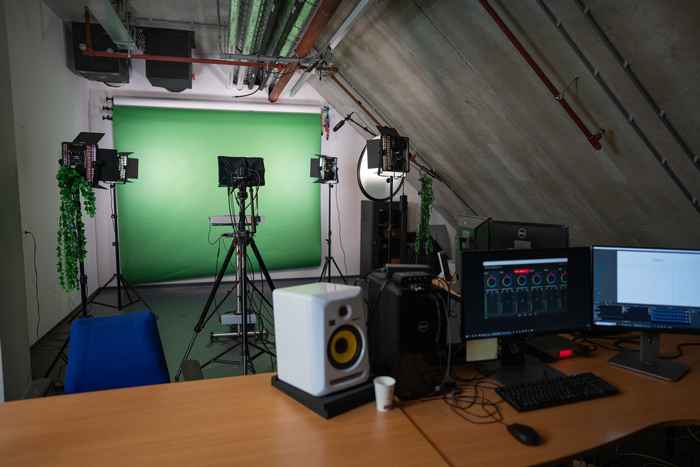
Recording in a podcaststudio

On location
Another option is to record an interview or dialogue on location—for example, a doctor–patient conversation in an outpatient clinic.
- Whether free recording options are available for lecturers depends on the faculty. Check with your faculty ICTO or TLC.
- Lecturers from all faculties can engage the Audiovisual Centre (AVC). A camera operator and a member of the production team will be present, and recordings are made with two cameras. The first version will be delivered within two weeks. You can discuss the production with the AVC and contact them via info-avc-icts@uva.nl.
How much does a recording like this cost?
- Costs vary by studio and by faculty arrangements. The FMG, FNWI and Medicine faculties have specific agreements with their studios. Check with your faculty TLC to see what is possible.
- In the AVC video studio, a half‑day recording costs €895 for up to 2 hours or €1,335 for up to 4 hours. This includes editing and one round of corrections. The first version will be delivered within two weeks. After you have provided feedback, the editor can make the changes. For an appointment and/or more information, contact info-avc-icts@uva.nl.