





Increasing sensitivity to diversity
| How can we support lecturers in designing education that does justice to the many perspectives students bring, as well as the diversity embedded within disciplines themselves? And how do we ensure that professional development on these themes actually works? With these questions in mind, Brit Giesbertz attended the conference of International Consortium for Educational Development (ICED) in Aarhus (May 2022), centred on the theme Sustainable Educational Development. Brit shares her experiences. |  |
Lessons learned
The counterproductive effect
The first workshop I attended immediately highlighted a key risk: unconscious bias training can have counterproductive effects. This happens especially when responsibility is placed solely on individual teachers and when training focuses only on awareness rather than on actionable strategies (see Binna Kandola Atewologun et al., 2018).
Participants may recognise bias yet still struggle to change behaviour because this requires adjusting existing mental frameworks. Without sufficient depth, such training can even reinforce stereotypes rather than challenge them, as participants may fall back on familiar assumptions instead of developing new perspectives.
The implication is clear. Effective interventions must move beyond one-off sessions and individual reflection. They should be sustained, collaborative, and structurally supported.
Institutional stories
A recurring insight throughout the conference was the importance of examining the narratives that shape education. Not only personal experiences of teachers and students, but also institutional and disciplinary frameworks that influence what counts as knowledge. Questions such as who designs curricula? In which historical and cultural contexts theories emerge? And whose perspectives are centred, and whose remain footnotes?
Several universities illustrated how they critically engage with these institutional layers, including initiatives aimed at curriculum decolonisation. Keynote speaker Kathryn Sutherland highlighted the value of holistic professional development: “People are more than just teachers. Look at the whole academic role, institution and person.” And at Victoria University of Wellington, teaching approaches are informed by Māori values such as rangatiratanga (leadership and autonomy) and akoranga (reciprocal learning), demonstrating how educational practices can reflect wider cultural principles.
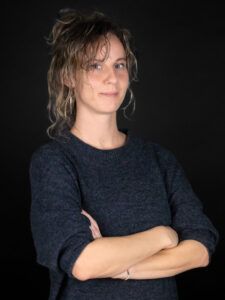 |
Brit Giesbertz, didactical educator at TLC Science:
‘A recurring insight throughout the conference was the importance of examining the narratives that shape education. Not only personal experiences of teachers and students, but also institutional and disciplinary frameworks that influence what counts as knowledge.’ |
Student’s stories
An illustrative initiative highlighting the impact of student narratives was the Big Change project at Manchester Metropolitan University, a student-led programme addressing racism within the university. Black, Asian and Minority Ethnic (BAME) student ambassadors interviewed heads of department and published these conversations online, combining dialogue with accountability. A particularly striking element of the project was a series of short videos in which actors portrayed students’ experiences of exclusion, for example what it feels like when your name is mispronounced for an entire semester.
Storytelling as a method for professional development
One approach worth further exploration is the use of storytelling within teacher development. Such methods can support reflection on educational philosophy and professional identity, while also strengthening a key competence for inclusive education: careful and attentive listening.
About Brit Giesbertz
Brit Giesbertz is well acquainted with Science Park. She is both alumna and former lecturer of the Bachelor Psychobiology, worked as study advisor for Information Studies, and is currently fulltime part of the professional development team for the Teaching & Learning Centre Science (TLC).
Interested to talk more about this particular topic? Or want to know more about inclusive education?